

My favorite games of 2025
This year has been a roller coaster for myself and the website in general. As odd as it sounds, we re-launched as 70% Complete less than twelve months ago; this time last year, we didn't even have a name.
In the past twelve months, we joined the Corner of the Internet Discord, I guested on Short Game Long Talk and Spotlight Games, I joined The Content Mill podcast, I got my first and my twentieth press code for a game. We did a 24-hour charity stream for Extra Life that raised over $500 for Boston Children's Hospital and Logan and I saw our faces on the Giantbomb Extra Life page. We recently crossed 100 subscribers on Youtube and are quickly on our way to 200 as we speak, powered by ten new video essays, the launch of the Point to Point podcast, and a handful of full playthroughs (and less than full...looking at you, Atomic Heart).
Logan and I have spent the year building a far-too-long gear list and a skillset that will carry the project forward into 2026, where we plan to launch a new show (or two!) and publish some of our most ambition work yet.
It has been a big year for us, but it's been a big year for games too. So, instead of the typical knock-down-drag-out fist fight to Number One, I want to highlight ten of my favorite games of 2025, in no order. If you want an ordered list, check out the Corner of the Internet GOTY podcast or my list of top three horror-adjacent experiences for The Content Mill.
For all the incredible art coming out, the industry (and the many many people who work within it) continues to struggle. It continues to be a rotten year for the people making, covering, and playing video games, so instead of weighing these games against each other, I want to celebrate the hard work of the people that kept me entertained through this hellish year.
Alright, let's get into it: here are my top 10 games of 2025.
Mars First Logistics
For many reasons—several not even because of the game itself—Mars First Logistics is, if I am forced to choose, my Game of the Year. Since this isn't an ordered list, it doesn't matter if it's number one or number ten, but I know how you gamers are.
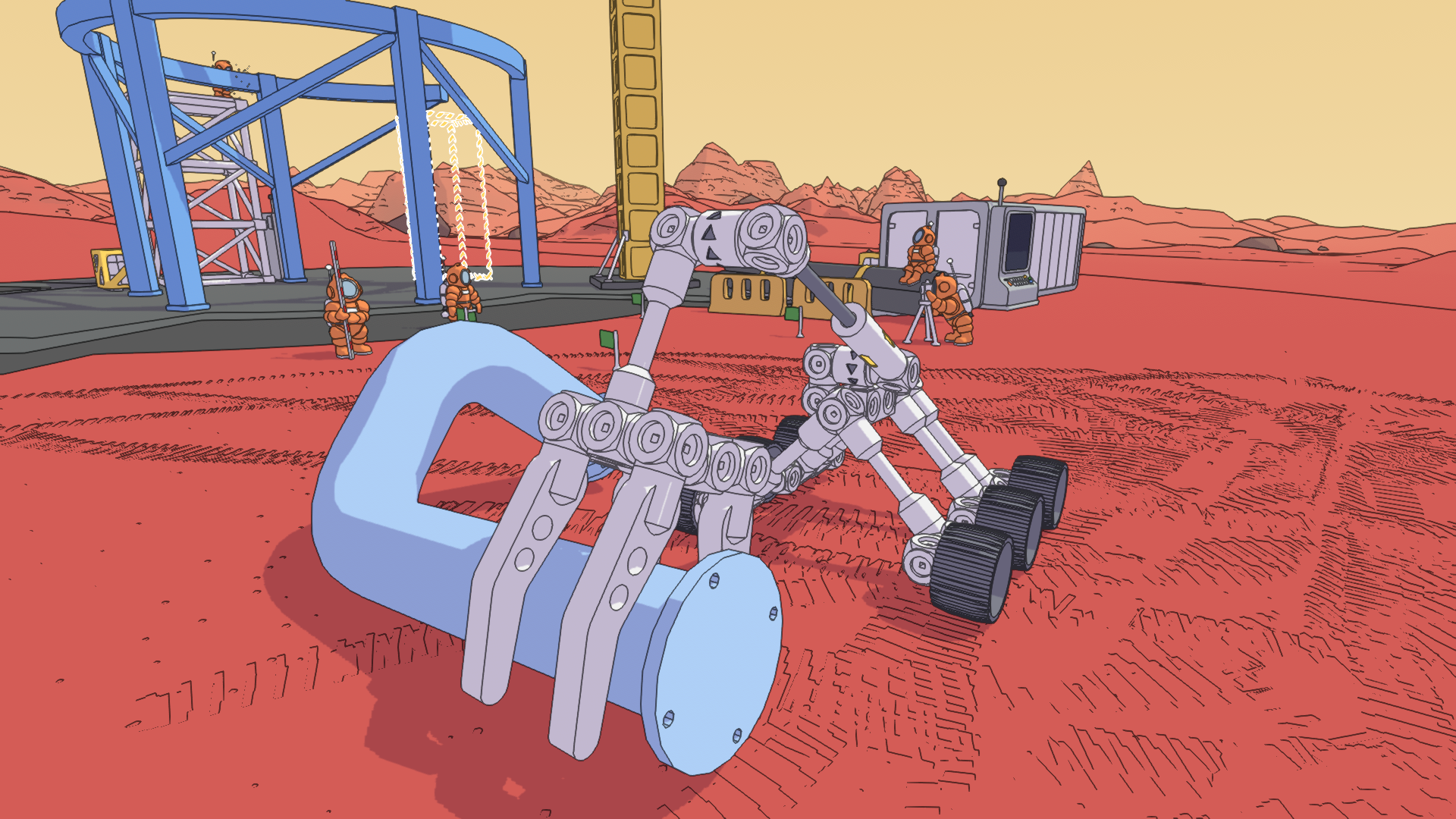
Mars First Logistics is my ideal game: build silly or serious machines to deliver nonsense across the surface of Mars. Every moment of this game is a heady cocktail of genius, comedy, and tragedy with a swirly garnish of hubris. I love Mars First Logistics: the music is the most upbeat thing I've heard all year, the building tools tickle that Lego part of my brain, and the diagetic moments of hitting a rock wrong and flipping the antenna off of the television you're delivering so bad that you need to stop mid-mission and fully re-engineer your machine hit that balance of frustration and comedy.
If you've been scared of trying a game like Kerbal Space Program, try Mars First Logistics. It's silly, it's kind, and it's built for you to have fun.

Duskpunk
I've waxed poetic about Duskpunk a handful of times now across podcasts and reviews, but in case you missed all of them, Duskpunk is a Citizen Sleeper-style narrative dice game set in a steampunk world. You play as a veteran who is thrown on a barge of dead soldiers and sent back to Dredgeport, your assumed lifeless body grist for Plasm, the magical power source that fuels this empire's innovation. You awake moments away from the furnaces and escape, beginning an adventure that has you surviving the harsh realities of a city on the brink.
Unlike Citizen Sleeper—a game more interested in surviving with your found family among the stars—Duskpunk is a game about helping The People and building solidarity. It may be possible to just scrape by and live a life, but Duskpunk is a game deeply interested in revolution, the power of collective action, and uniting disparate peoples to topple a government that only wants to take.
At time of writing, Duskpunk has sold less than 2,000 copies, a criminally low number. If you like Citizen Sleeper's prose and mechanics, I think you'll like Duskpunk. If you, like me, fantasize about a government run by the people and believe in the strength of unions, I think you'll like Duskpunk. If you like the style and world building of Dishonored, I think you'll like Duskpunk. If you like games that introduce a currency based on how much you help the collective, then lets you cash that in in a super thematic and cool way? Guess what, I think you'll like Duskpunk.
As Long as You're Here
Like Duskpunk, As Long as You're Here is a latecomer to my game of the year list, squeaking by in late November. I've described As Long as You're Here as PT, but instead of making you scared, it makes you sad. The PT comparison works so well because there are moments of deep horror and panic, but I think the comparison undersells the emotional power of As Long as You're Here.
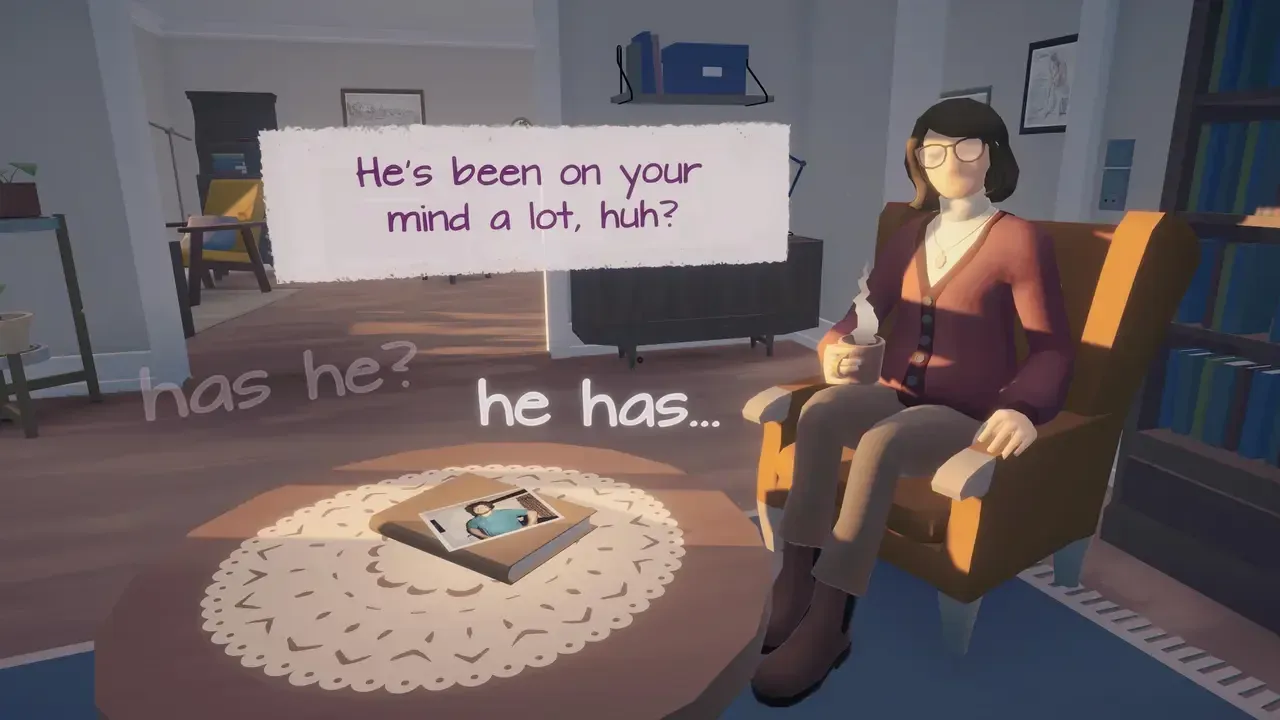
You play as an elderly woman experiencing a rapidly worsening case of Alzheimer's. You'll wander her small apartment, complete small tasks like making coffee or watering plants, and complete a small family tree while experiencing more and more vivid memories of your past. As Long as You're Here offers a tender vision of dementia, but one that doesn't soften the blows.
You will mostly likely cry playing this game, but the true testament to the story and gameplay is that you cry playing this game because you can't find your coffee mug. The mundanity of a misplaced coffee mug can affect you so dearly because of how effectively this game portrays living with Alzheimer's and how intensely you'll inhabit this character. This game has helped me understand a human condition I hope to never experience and gain some much belated empathy for my grandmother who lived with dementia in her last years.
I cannot recommend As Long as You're Here more highly. It is a must play if you enjoy (?) tender, human stories that you can pack into an hour and a half or so.
The Last Caretaker
I had a joke that was only somewhat a joke, that miraculously A Game About Digging a Hole would make it onto my list this year. Unfortunately, it made it a good distance into the year, but was defeated by The Last Caretaker, another game in the tool optimizer genre. I mean, really, The Last Caretaker is a survival game about setting up ever-more-elaborate machines to gather the resources you need to create embryonic humans and shoot them into space, but in all honesty, it's been a cable management game for me.
In The Last Caretaker, you play as the titular Caretaker, the last robot on Earth that can restart the human race. You scrap trash to build machines and power generators to keep yourself alive, fabricate larger and larger things, and fight off the robots and bio-goop that gets in your way. Which is all in service of gathering enough good bio-goop to create human life that you shoot off into space. Also you drive a boat.
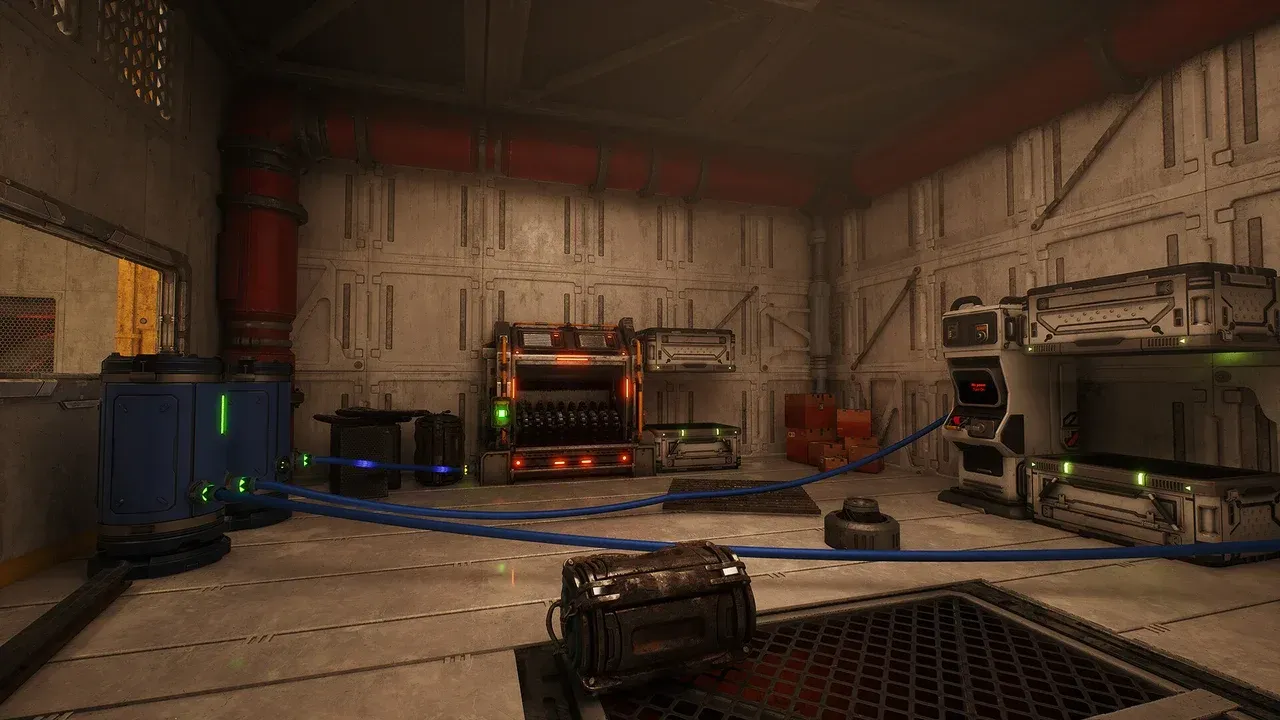
This is an early access survival game like so many other early access survival games, but what has really stuck with me is its method of wiring and hosing. Everything needs a wire or a hose or a cable or a tube. You will spend literally hours somewhat overencumbered weaving power cables—real, modeled physic objects—from one side of your base to another to power stuff with electricity, diesel, petrol, water, gas, and some mysterious sixth option I haven't unlocked yet. The combat is fine, the story is kinda whatever, but ka-chunking electrical cables from a solar panel into a battery array is so satisfying.
And, like I said, you drive a boat. The entire world is an ocean, so you'll navigate from outpost to outpost, slowly restoring this diesel station its former glory or harvesting hard to find materials and outfitting your ferry with the solar panels and fabricator you need to be a mobile base. Oh and this latest update lets you drive a forklift. I've been turning to The Last Caretaker a lot lately, satisfying my need for an automation/crafting game. If you're a big fan of games like Factorio, Satisfactory, but want a simpler survival factory game, I think you'll like The Last Caretaker.

Camille and Laura
Don't let the childish art style of this game confuse you, Camille and Laura is another game that will have you in tears at least once. Camille and Laura is a simplified point-and-click style game where you play as Laura, a single mother who is taking Camille, her five year old daughter, to school for the first time.
You'll make breakfast, get school supplies, drop off Camille at school, try to manage a forever growing pile of emails, and try, at the end of a long, monotonous day, to tell a convincing bedtime story. Weaving themes of single parenting (though so much of this game hits for all parents and nonparents alike) and coping with the economic and personal stresses of modern life, it's hard to not find something in Camille and Laura that resonates with you.
There are a ton of moments in this short 2-hour game that feel like a gut-punch (a teacher mentioning that you got the small box of colored pencils instead of the big one certainly stung), but the one that has lingered in my brain—and the reason it's on this list—is Laura's first visit to therapy. I don't want to spoil it for you, but how the game subverts the binary dialogue choices you have clicked through for the last hour or so is one of the most realistic moments I've ever experienced in a game.
If you like games with unique art styles and a heart of gold, Camille and Laura is for you. If you're a parent, I think you'll see a lot of yourself in this game, which, at least to me, was quite comforting. I felt seen. But, if you're not a parent, I think Camille and Laura is still worth a look; it's a great example of games being empathy machines and the conclusion of the game hits whether you have kids or not.

Mothership
I see what you're thinking and first off, hush, this is my list and second of all, nobody said it had to be video games. Mothership is, for my money (of which I've spent a lot of), the most disgustingly beautiful tabletop game I've ever owned and played. Described as a sci-fi horror RPG, Mothership takes a page out of all of your favorite sci-fi horror franchises—Alien, Dead Space, Predator, Event Horizon, Sunshine, the list goes on—and puts you and your players in the middle of a mission that is about to go horribly wrong.
What I love most about Mothership is how easy it is to play. Character creation is quick and the hundreds of modules are all relatively easy to jump into. Mothership is a game friendly to newcomers and great for seasoned TTRPG players alike; the rules are simple and offer a ton of opportunity for roleplaying. As you play, you'll navigate derelict freighters or haunted moonbases, accumulating Stress every time you fail at something. As that Stress builds, you're more likely to Panic, a mechanic that has you rolling on a randomized table to see what happens when you lose your cool with a Xenomorph running you down.
From a game master's point of view, Mothership gives you all the tools you need to build compelling, spooky adventures with just a handful of randomized tables. I generally hate randomized encourters in games and in tabletop, but with Mothership I roll randomized encounters—even monsters—just for fun in my free time. It's a super creative system that gives you themes and broad strokes that allow you to fill in the blanks. There's no monster manual, there's just the TOMBS System, Mothership's way of building a monster and an adventure all rolled into one.
The art and writing in this game is impeccable, somehow being easily parsable and pieces of worldbuilding in a way that detracts from neither; each spread is a feast for the eyes, while somehow being smartly laid out. I also think that the manuals and modules are masterclasses in layout design, showing how smart layout can make playing, learning, and teaching a game so much easier. Each book and third party module is laid out in spreads or trifolds, so the NPCs, tables, and maps, are always in contextual view. You're not flipping through a thousand pages of monster manuals, everything you need for this encounter is right here on one spread.
Mothership is a perfect game for you if the idea of playing an NPC that will almost certainly die in an Alien film sounds like your kind of evening. It's a great system to run if you're new to tabletop or new to running a tabletop game. Be warned though, a large emphasis is placed on player safety and drawing lines and veils (things we don't talk about, and things we don't talk about explicitly) for a reason: Mothership is a sci-fi horror game about trauma, body horror, and a whole bunch of other icky stuff. You can tweak that as much as you'd like, but just know what you're getting into.
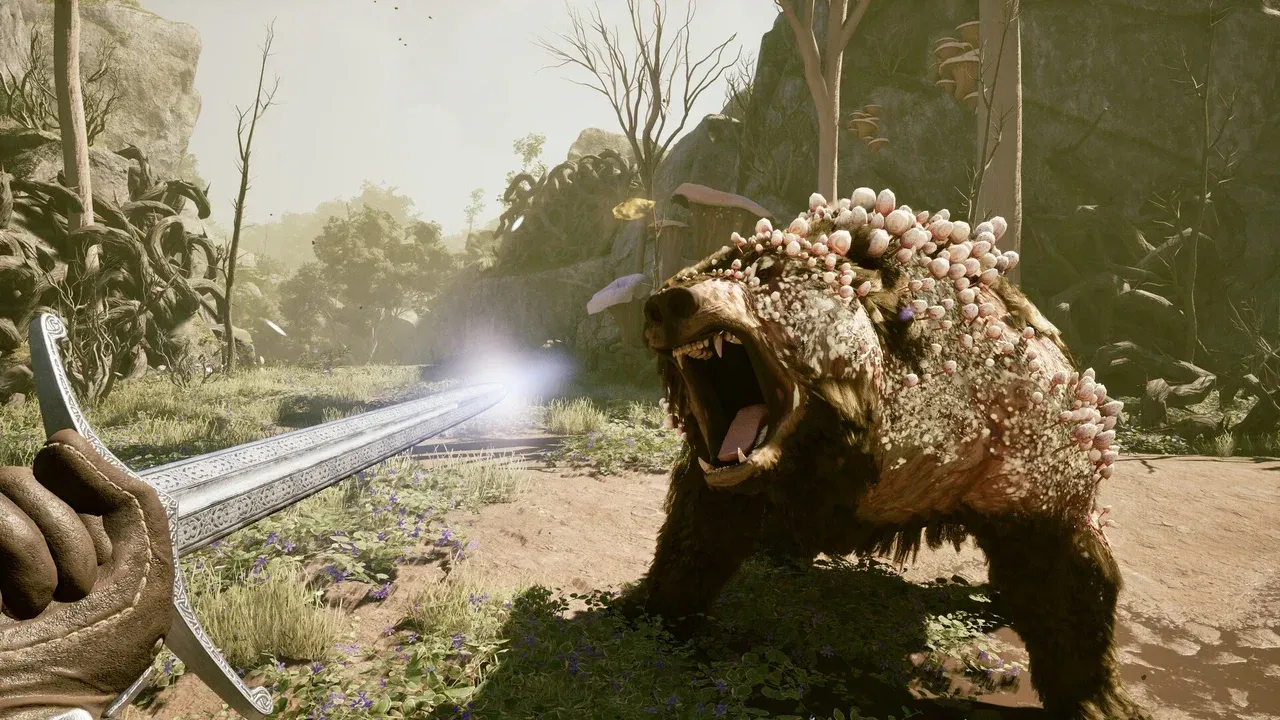
Avowed
I've had a unwritten review written for months now titled: "Avowed is more than Skyrim with mushrooms." In hindight, I can see why I never wrote that review, but the point of the title still stands. Avowed came out in February this year and then proceeded to get absolutely bodied by Blue Prince and Clair Obscur: Expedition 33. It seemed that this Obsidian game with Elder Scrolls style just never took off; it was not the New Vegas to Oblivion that so many people hoped for, nor was it a game with the intricately deep systems of the Pillars of Eternity games.
Even worse, some players would say, its open zone, not open world, gameplay and railroad-y quest design that didn't let you murder everyone in a village was too restrictive. Dear reader, I loved it. Everything people seemed to dislike about Avowed, I ate up. The core mystery of Avowed—who is this voice in your head and what do they have to do with this mushroom disease—propelled me forward. The open zone design had just enough interesting stuff to do without bogging me down too much. The companions were fine, but the payoff to their story was just what I wanted.
This isn't a game about a cipher becoming the hero of ages though. The game is much more thematic than an Elder Scrolls game, digging into the politics of representing the oppressors and exploring the cost of imperialism. I think a lot of people missed the point of Avowed. Too busy hacking and shooting their way across the Living Lands, it can be easy to ignore the game's theme: in a game where you play as a dignitary vested with the power of empire, do you simply follow orders or do you try as hard as you can to do the right thing? It's impossible to remove this game from its context; built by a team purchased by Microsoft, I find it miraculous that this game even came out, even if its eye-poking is veiled.
If you've heard any content I've been on in the past six months, you know I'm deep into making a massive video essay about this game, but you may not know that essay is about the political power of art and how Avowed's game design is much more surrealist than it might appear at first blush. Avowed is a game that I have thought about every day since I played it, both for the moments of astute game design and for the video. I've gone to museums, learned about surrealism, read a handful of primary resources, and learned a lot about what I enjoy about games.
So, while I won't recommend Avowed and break the BDS Boycott, I do want to recommend you look at your favorite game of the year and learn about its art and find more of it. Take some time to deeply think and learn about a game you've played; think of a theme or dissect a metaphor. Whether you're into games or not, I can always recommend going a day at the art museum or, if you don't have one nearby, find a new favorite piece in the Getty Museum's digital free-to-use portal.
Ambrosia Sky: Act One
From a heavy focus on horror games to jumping into Clair Obscur: Expedition 33, even though I'm not a huge fan of turn-based RPGs, I've really been pushing myself this year to try things I normally wouldn't. Weirdly in line with that is the washer/flipper genre. The satisfaction of making a muddy object clean (even if it is a Leman Russ battle tank from 40k), just doesn't do much for me; I need a good story too.
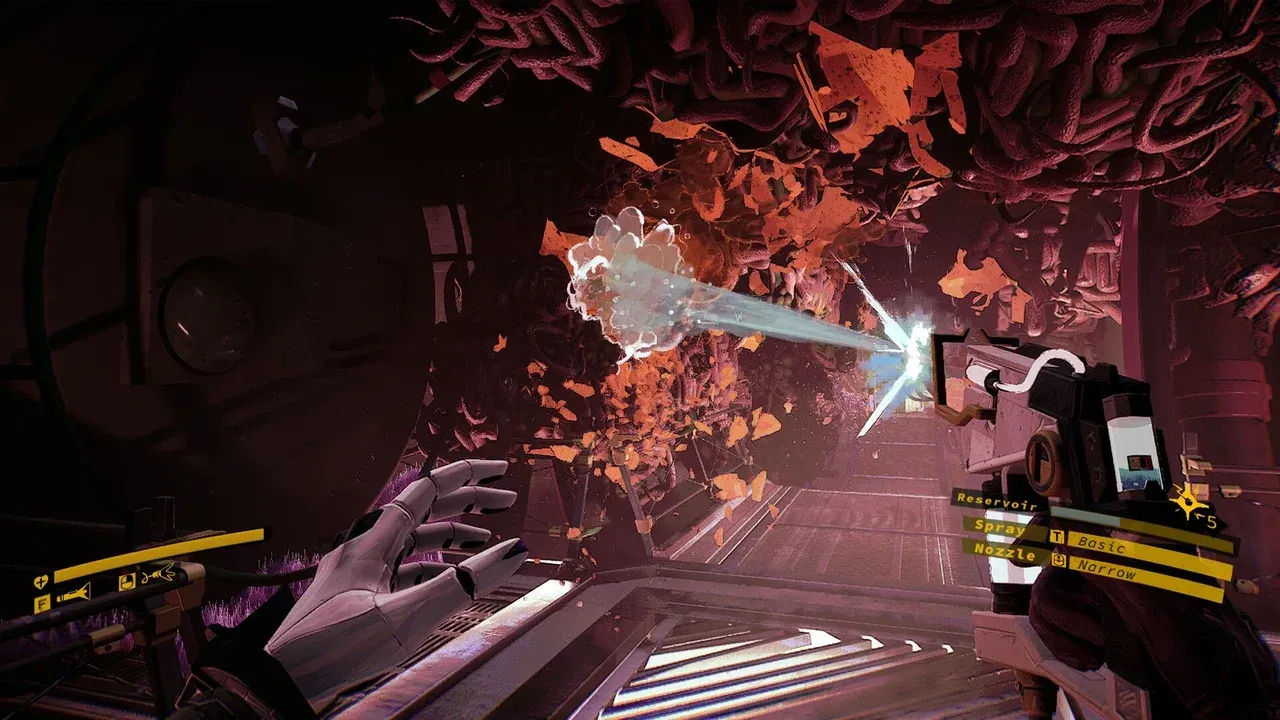
Which is where Ambrosia Sky comes in, a Powerwash Simulator style game with some light immersive sim elements that has you exploring derelict space stations, washing away fungus, and trying to figure out really happened here. I loved Ambrosia Sky—jank and all—because of the story: a heartfelt tale of a woman returning home after fifteen years among the stars. The names are familiar to her, but this is no home.
One of my all-time favorite games, Prey (2017) gets so many things right about immersive sim design, but the thing I always think about beyond the traversal and play-your-way design is how real the station feels, even when everyone is dead. Ambrosia Sky, miraculously, makes me feel the same way. Yes, there is a compelling mystery (what's a Leviathan Organ, anyways?; who is this weird email NPC that is just a bunch of eyes?), but when you're blasting your chemical sprayer to make a path through this habitation module, I'm not thinking about elder gods (though if you're reading your emails there just might be elder gods out there), I'm thinking about the very real people who used to live here.
You are a SCARAB, a member of a science team investigating the key to immortal life among the stars; as you wander the halls of a dead station, you'll find prominent figures in your character's past, and then reclaim their DNA for the Ambrosia Project. These moments are soft and tender, the first one causing me to get teary-eyed when it snuck up on me. This game has a reverence for death few video games display.
If you like games like Powerwash Simulator, check this one out. You also might like Ambrosia Sky if you enjoy immersive sims with little to no combat or if there's something fun about exploring a derelict space station (see: Mothership, above).

South of Midnight
For all of its flaws, I really enjoyed South of Midnight. Or at least, I enjoyed most of South of Midnight. I've been pretty vocal about this game for the past six months or so, but I left my time with South of Midnight feeling really high on the world building, the story, and how well it wove together themes of violence and kindness. I also grew incredibly bored and annoyed by the combat, eventually turning on the accessibility option to skip it.
But, as time has gone on, I still think about each boss, a person turned into a terrible monster by their pain, grief, and sorrow. I think about the music, the magical realist bayou, and, I think about the subtle ways this game tries to explain that you can't defeat every demon with violence. For a game that felt so reminiscent of Spyro the Dragon—flying through cloud rings included—South of Midnight manages to provide Pixar-level gut punches I didn't expect...and then kept delivering them to the very end.
There are plenty of quibbles I have with South of Midnight, but it's a game telling a new story in a big-budget kind of way. Its explorations of grief hit harder for me than a particular French flavored game, for example. Just do yourself a favor and turn off the combat, it'll probably be a more thematically rich and enjoyable experience.
Since South of Midnight is currently the target of the BDS Boycott and I don't want to recommend you try it out, check out these other pieces of southern gothic fiction that can give you a flavor for the setting and some of the themes: Norco is a point-and-click game where you must find your brother after your mother dies in a dystopian future Louisiana; Beasts of the Southern Wild is a magical realist film set in a Delta community where a young girl must rebuild her world; Kentucky Route Zero is a game that's, well...I'm not sure, but its vibes are related.
The Seance of Blake Manor
I have only played one entire human hour of The Seance of Blake Manor and I already know it belongs on this list. I love a detective game, I love black metal druidic magic, I love out-of-this-world graphic design, and I love wandering around a puzzle manor house; guess what: this game has them all.
I don't have a ton to say about The Seance of Blake Manor, like I said, I've only played it for an hour. But I know, deep down, that the smart deduction system and the Very Real Supernatural mystery happening in this mansion is going to have me gripped all winter long. This game was what I had hoped Blue Prince to be: a mystery that is just as much about the people in the house, as the house itself. Knowing there is an end just makes it all the sweeter.
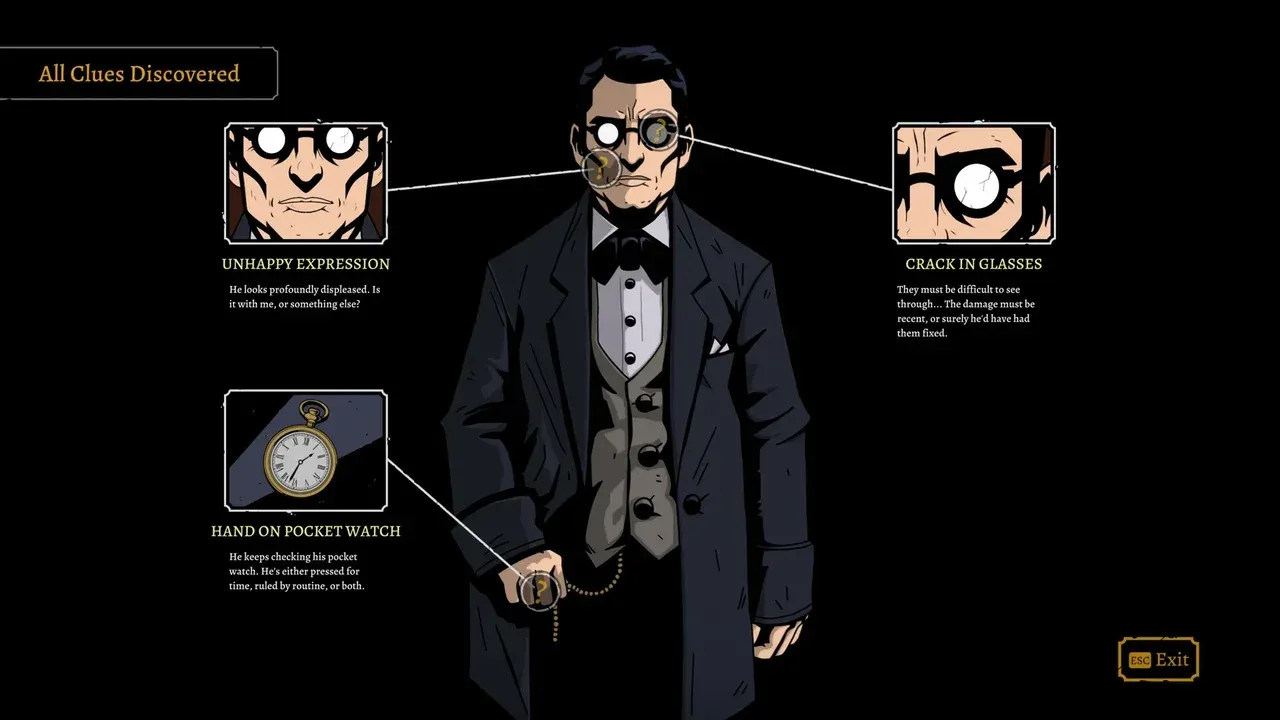
If you've played less Seance of Blake Manor than I have, it's a first person deduction game where you stroll around a manor house and inspect objects, make deductive leaps, solve puzzles, and hope to do it all before time runs out. You can freely explore parts of the manor, talk to NPCs, and inspect anything, but each time you do, it progresses the in-game clock by one minute. Explore as much as you like, but looking at a clue—whether a jack-o-lantern or a pile of papers in a trashcan—gets you one minute closer to game over. And you can hit a game over! I failed the tutorial section once, but just like in Blue Prince, you retain the locations of items and the knowledge you gained, so what took me 30 in-game minutes to fail, only took me 16 in-game minutes to pass.
If you liked some of the deduction in Return of the Obra Dinn, liked the manor house (but not the RNG) of Blue Prince, or just want a really well done period piece version of a Nancy Drew game, you really need to check out The Seance of Blake Manor.
Update: I’ve played about eight hours of this game now and I can confirm it kicks all the ass. Multiple endings, a super cool mystery, and a setting that feels so important to the story has this game sitting very high for me this year.