
Plan B: Terraform is exactly what I want from a factory game
I'm still working my way through the early phases of Plan B: Terraform, an automation/factory game from Gaddy Games. After almost ten hours of play time, I've managed to finally perfect my hexgrid-based factory optimization, build a population of about 800 people on the surface of Not-Mars, and unlock the ability to mine water-ice. But I'm getting ahead of myself.
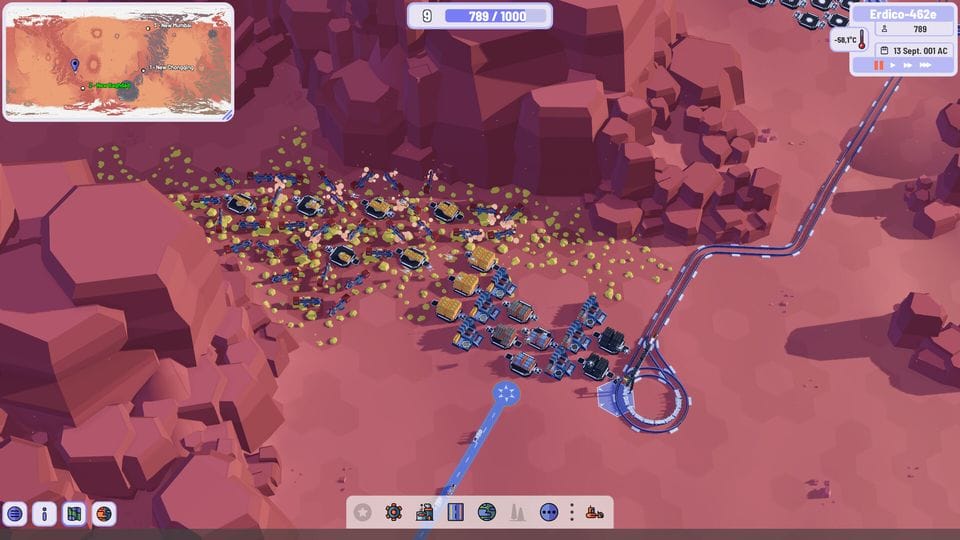
Plan B: Terraform is a calm colonization sim that lets you build a colony on a planet that closely resembles Mars. You are the overlord of the colony, but instead of managing the colonist dynamics in something like Surviving Mars—or really having any interaction with colonists at all—you are the civil engineer, building clusters of resource collectors, depots for storing resources, and the pathways to get those resources where they need to go.
As the colony grows, so too does the number of plates you're spinning. The gameplay is simple, following a predictable path: mine resources, store them, create intermediate components, and create final components. Because you are building a colony far from home, everything you place—from the extractors to the roadways—needs to be created on-planet. You can't mine more iron ore until you mine iron ore, send it to a depot, offload that ore into a factory to create steel bars, then send it to another factory to create an extractor. That may sound complicated, but when you have an entire planet to set your extractor/factory mega complexes on, there's a lot of room for experimentation. Not long after starting, you'll see resource and building numbers hit idle game levels of scale.
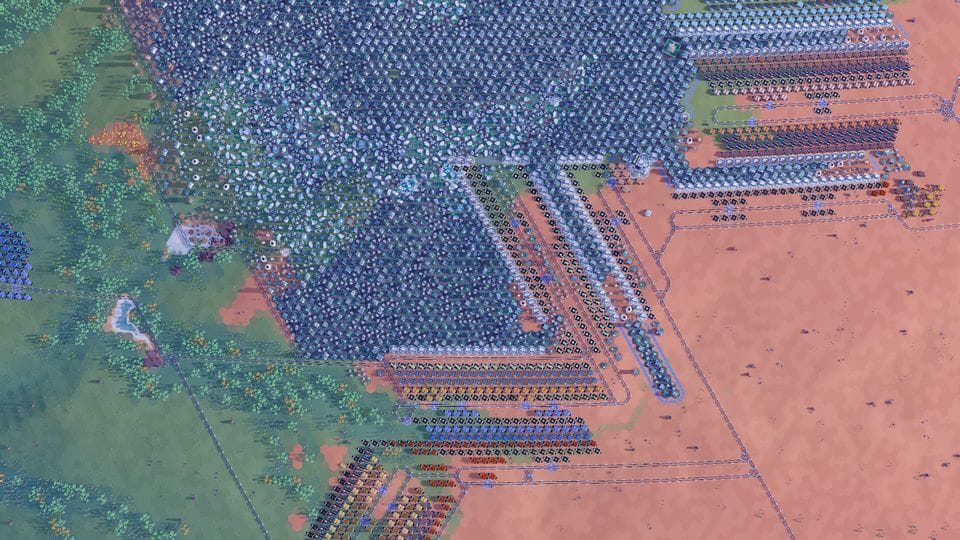
In the "great divide" of factory games (Factorio vs. Satisfactory), Plan B very much falls within the Factorio bucket. You are making grand-scale factories and developing railways that crisscross entire hemispheres. Unlike Factorio, though, you're building all of these factories for life to flourish. Your progress isn't directly gated by resources collected, but instead by colony population. Provide the people with what they need, and you'll grow your cities and your capabilities. At least early on, I've been able to steadily grow my cities without feeling rushed or frantic. The population seems to go up when the cities are fed the right resources, but if you take your time, the game doesn't punish you harshly. New York City 2 hasn't disappeared off the map because I dawdled delivering concrete.
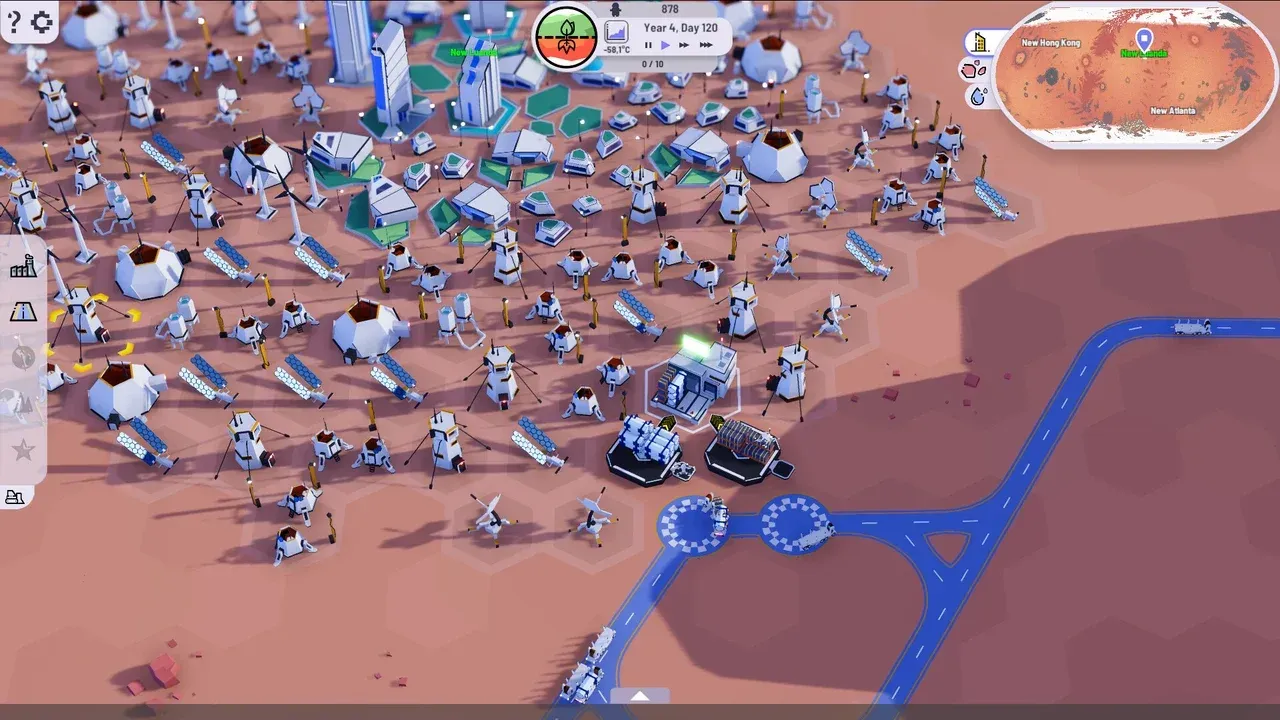
Each step up the tech tree unlocks newer components that mix and match with older ones. You'll unlock reinforced concrete or high-tech parts that are combinations of earlier base materials, allowing you to upgrade your road and truck networks into more efficient trains. I've enjoyed the tech-tree friction; it always seemed like the optimizations of trucks to trains or small depots to larger ones happened right around the time I wanted them.
The build tools are simple; complexity is introduced by the materials you can gather or how they are combined, rather than adding a ton of buildings to use. Each level will add new materials you can gather (iron, sulfur, oxygen, carbon, etc.) and new ways to use them (larger depots, trains, recycling centers), requiring you to build bespoke factories and elaborate transportation networks to produce them. Since the game is at a planetary scale and you'll be managing a handful of colony cities at the same time, being able to scan the buildings you have and things they're making helps with scanability. You'll quickly drop down observation towers that allow you to label sections in orbit too, if you can't quickly ID a factory complex.
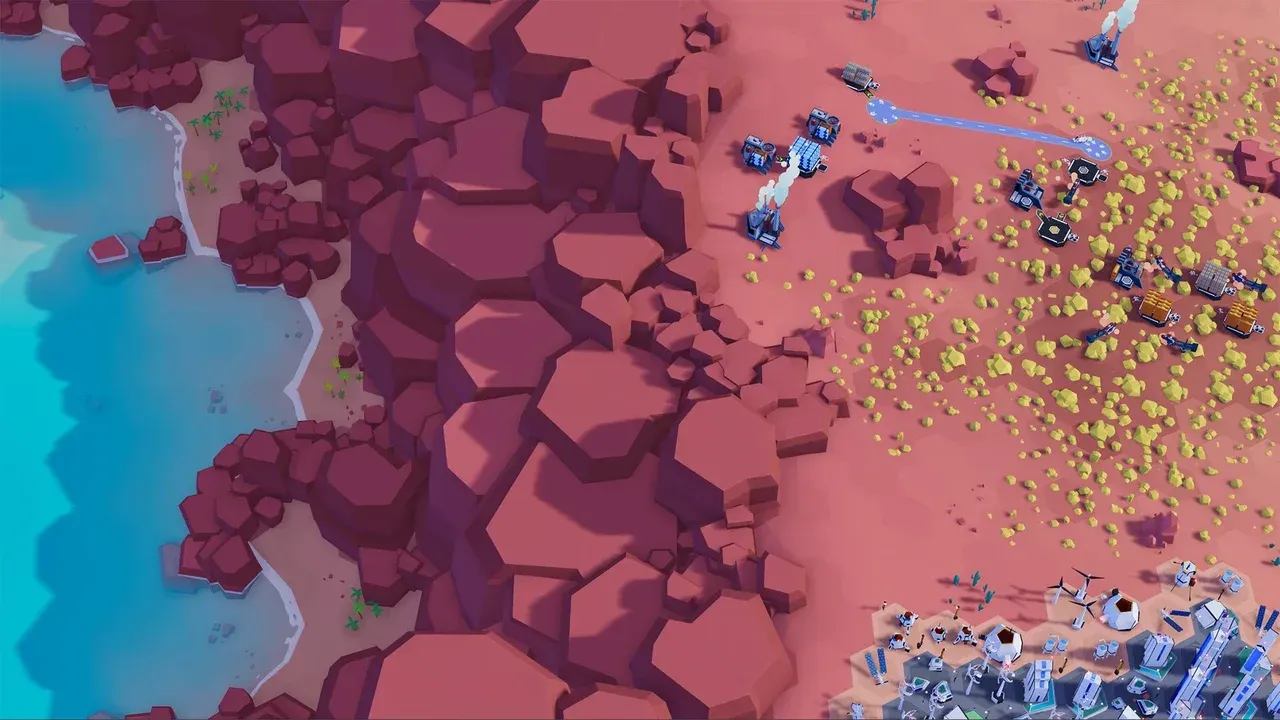
The planet scale and multiple colonies may sound tricky to manage, but I've found it freeing. The great trick of the game is how much it encourages experimentation. When you have three colonies that require a particular material, you'll probably prioritize one colony just to learn how to create the material, but by the third go-around, you'll have a halfway decent optimized grid of interconnected factories and resource gatherers. This is the part of the game I relish. I come to these factory games for the genius bits of "figuring it out" and cracking the code to the optimal way to build. I'd spend hours tearing down factories in Factorio just to properly weave a conveyor belt in a slightly more efficient way, but in Plan B, I have entire zones of the planet to test out new layouts. I need that space because my brain still struggles to wrap my head around the hex-based building system (instead of Factorio's square grid). It certainly helps that if you delete a building, you just get it back, instead of destroying it.
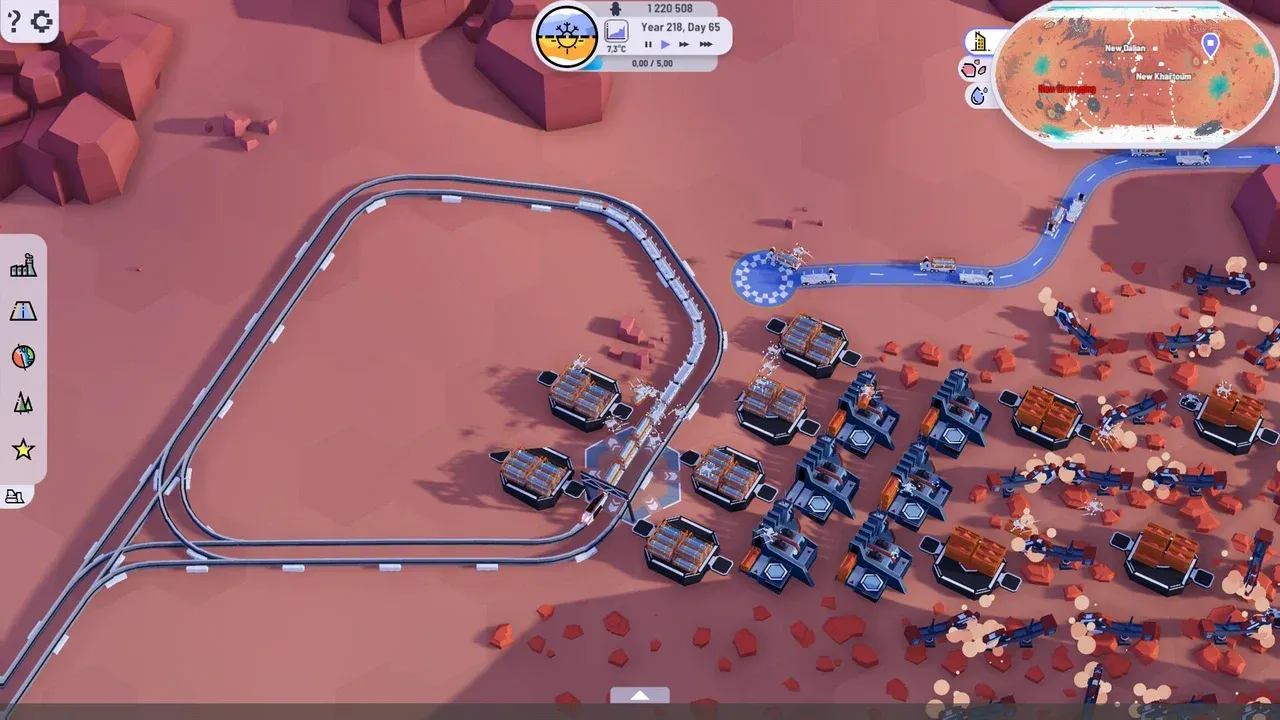
I've just gone on for a decent chunk here on the parts of the game I've played, namely the early bits where you're still establishing a nascent colony on a big red rock in space. But I've left out half of the game's name: terraform. There is an entire second part of this game I have yet to experience.
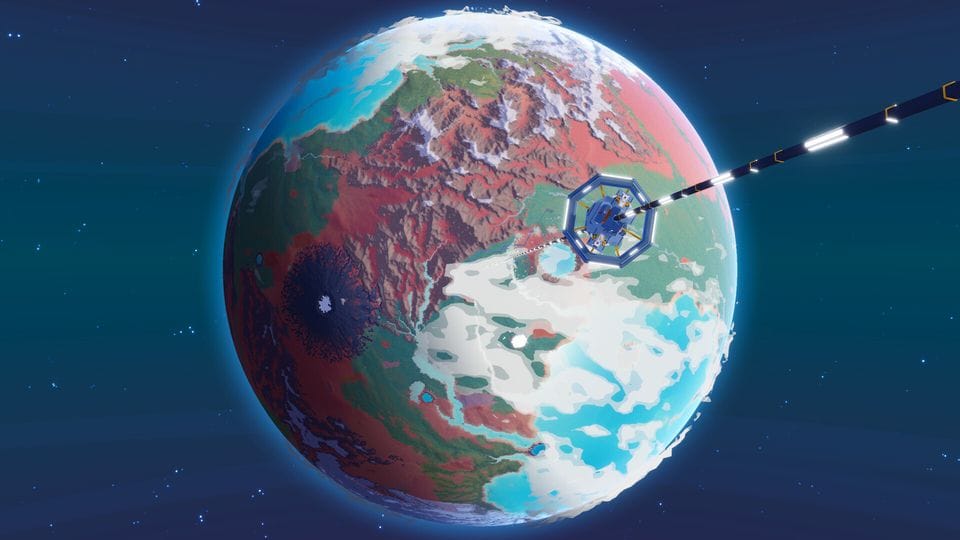
As the colony grows and you gather materials, you are also tasked with shifting this barren rock into a livable new world for humanity. That starts relatively early when you unlock the atmospheric harvesters and generators, outputting greenhouse gases from materials you gather from the surface. Where I am in the game, I'm still raising the temperature and generating an atmosphere, but if you look at screenshots, you'll see a lush planet with intersecting waterways filled with shipping lanes.
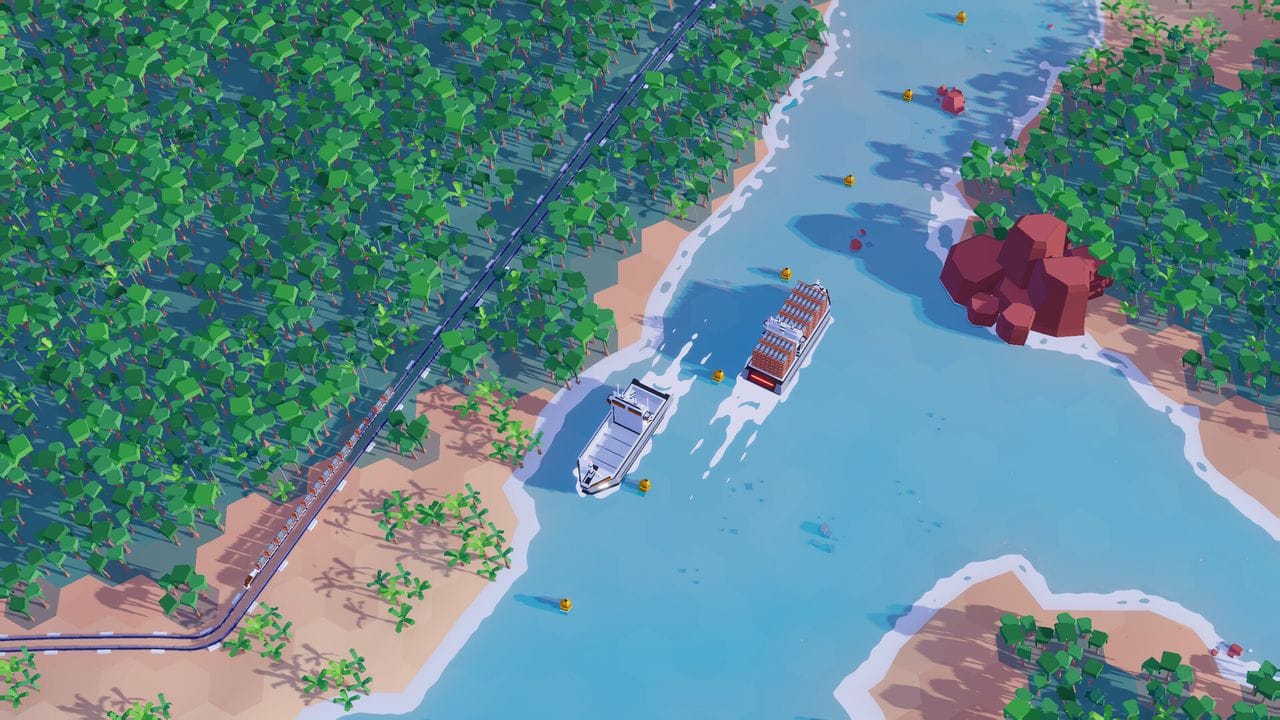
After ten hours in Plan B: Terraform, I've only managed to get my head around the basic methods of resource extraction and delivery, but I'm so excited to unlock more and watch the world change around (and under!) my machines. When you enter the scan mode that highlights resources, you also get a sneak peek at possible waterways as the map evolves, which I can already tell will be a problem for some of my factories. It's this level of map evolution that really gets me excited about continuing to play Plan B.
As I achieve my goals and expand my factories in games like Shapez or Factorio, the challenge becomes handling complexity and optimization, but I can already tell the real challenge of Plan B: Terraform is the planet itself. No matter how successfully I optimize my factory layout, a river may change my plans in a few hours, and those changes are signs of success! As the planet becomes more Earth-like, my goals change: how to build harmoniously with the evolving nature of the planet and allow my society to succeed.
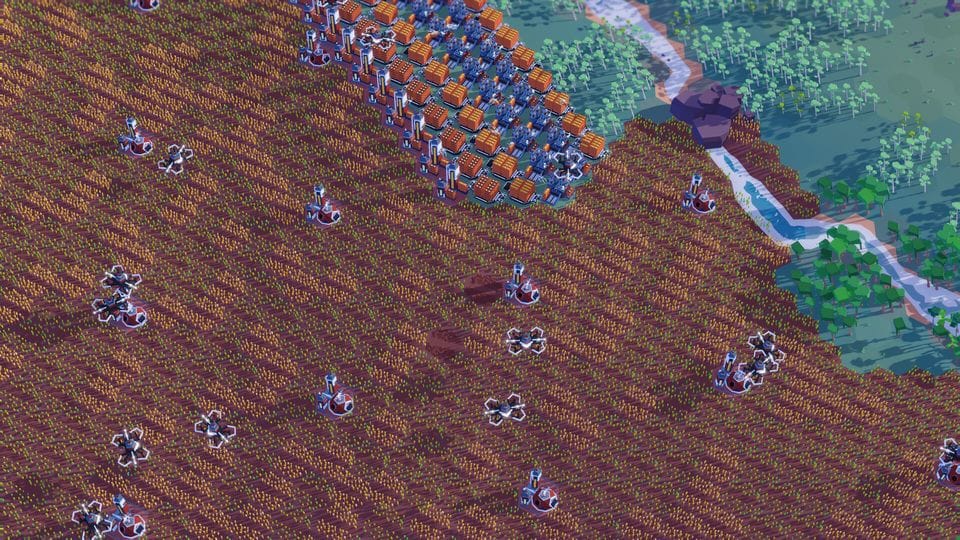
Go check out Plan B: Terraform if you want a factory optimization game that isn't about blotting out the sun with a Dyson Sphere or filling the sky with noxious chemicals just so you can escape the planet and do it again. Plan B: Terraform is a fantastic, chill factory building game that rewards experimentation and encourages play over the crushing need to get it right the first time. Oh, and there's materials recycling. Surprise, it's a Phil Game.