
Amberspire is a city-builder unlike anything I’ve ever seen
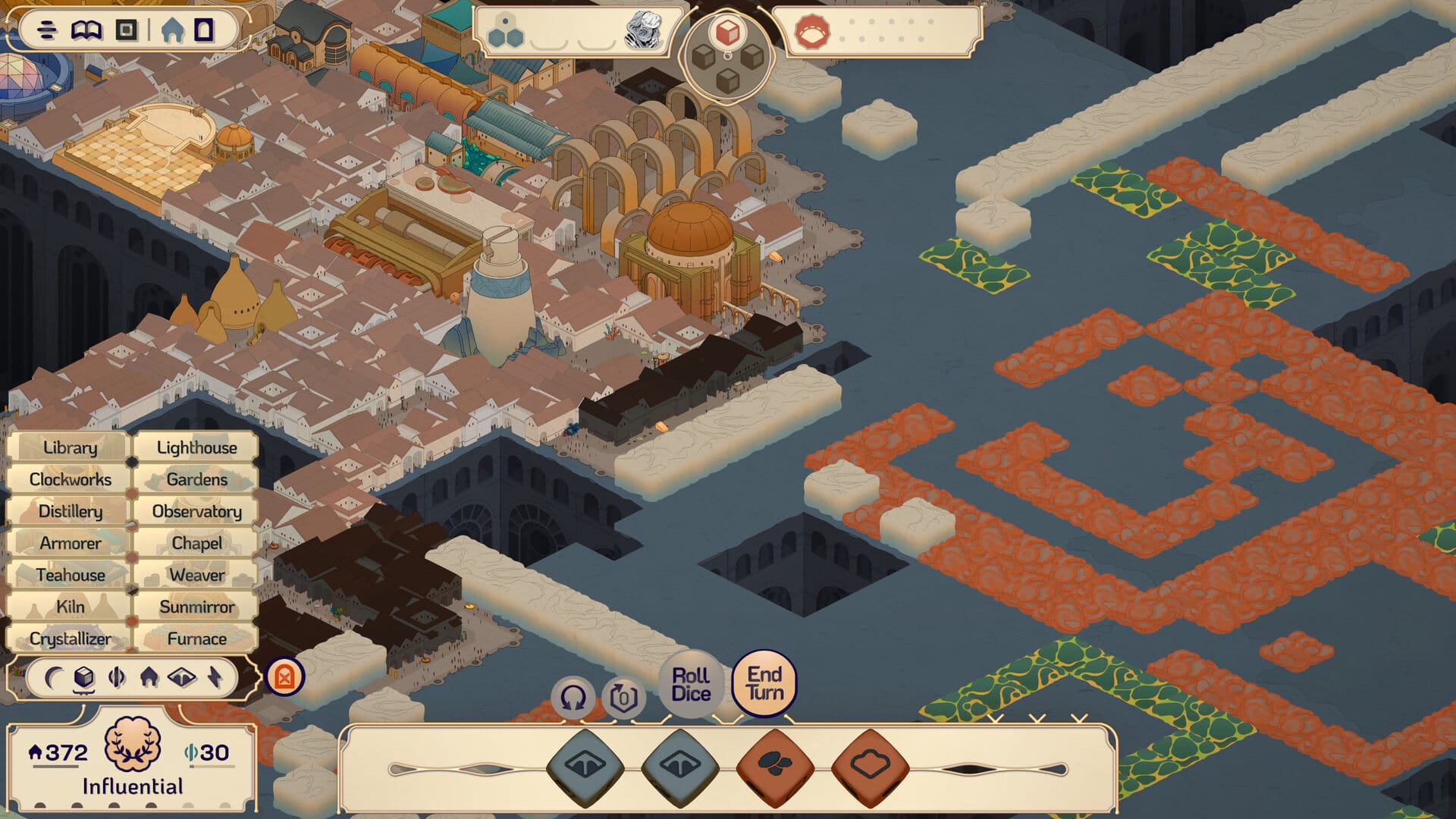
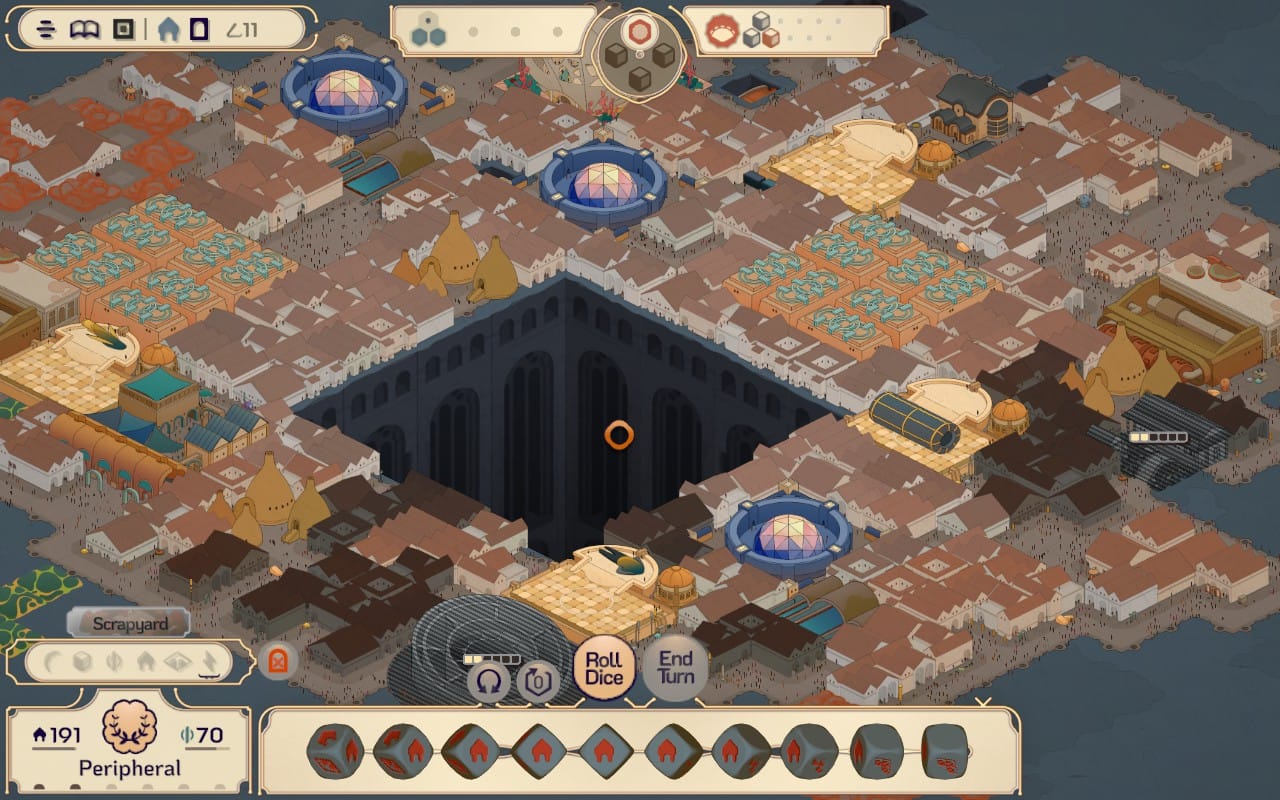
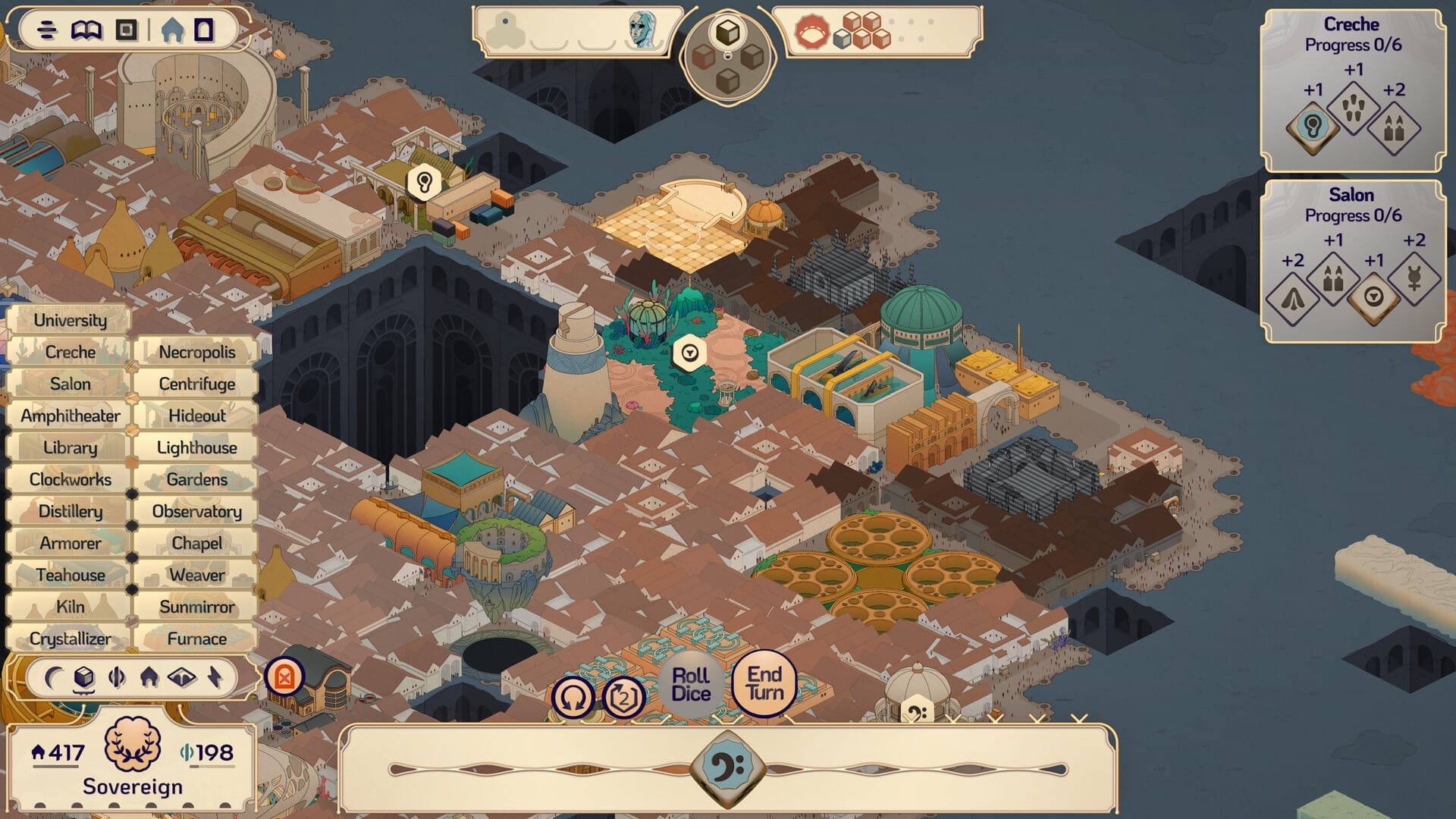
I select my Kiln, two Crystallizers, Teahouse, Library, and a Sunmirror in the second season of Cycle 19. I roll their resource dice, yielding Bricks, Dust and Mirror, Music, Insight, and Weather, respectively. I give the Bricks to my landing pad to grow my city’s population. The Dust goes to my Cistern to push back the flood, and the Mirror is sent to the Bazaar for more influence. I needed other resources from the Teahouse and Library to continue building the structures in this sector of town, so they remain in the dice pool. The weather dice joins twelve others.
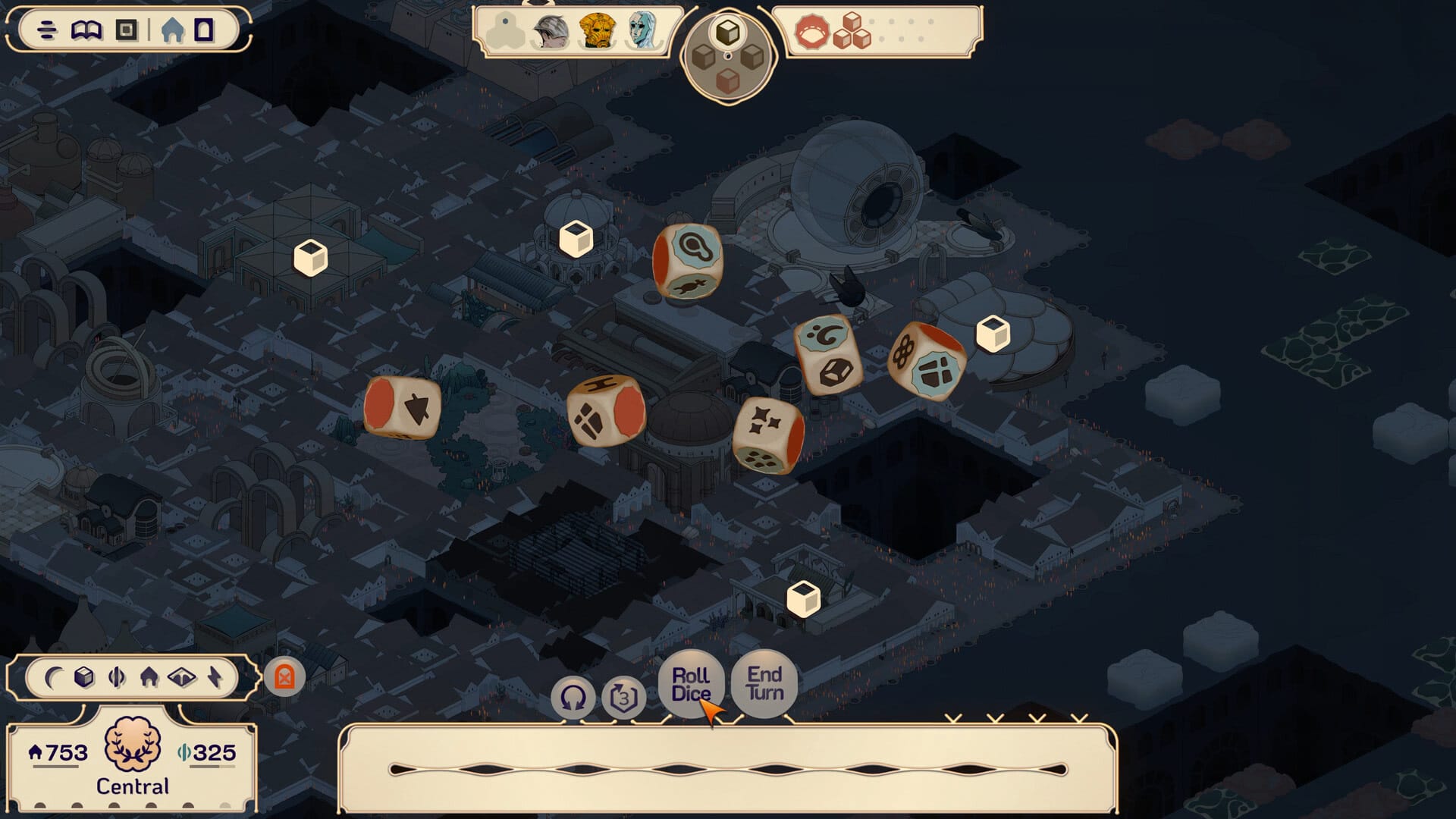
Cycle 18 was tumultuous on the Sixth Moon of Amber; the encroaching flood and rust threaten to choke out more residences. Perhaps the third season of Cycle 19 will yield the resources I need to hold back the Rust. Though I can’t turn them into influence or use them for construction, I imagine the people of Amberspire happy and thoughtful with their Music and Insight. Perhaps Music flowing from the Teahouse provides some comfort in dangerous times on the Mausoleum Moon.
It is stories like these that keep me coming back to Amberspire, the latest game from Lunar Division, makers of The Banished Vault. Each dice roll becomes an emergent tale of survival, culture, and adversity as you play. In Cycle 3, the fledgling city celebrated its first new landing port that brought goods and new neighbors from among the stars. Cycle 12 brought new alien settlers. In Cycle 27, the city’s first Cistern was destroyed, and the first garden was constructed. The Sixth Moon gives, and it takes; the city grows, built atop the dead, failed attempts to thrive buried beneath them. This time, the city will remain. Probably.
In most city-building games, the “story” you tell is one of scale and infrastructure. The city center is sloppy and ramshackle, but as more building types and zoning tools unlock, you can build the perfect engine of industry. This is the Sim City, Pocket City, or City Skylines path of city building; games where the task is to optimize urban planning. The focus is often on infrastructure or the red/yellow/green sentiment of entire city sectors. Even in citybuilders that lean more toward science fiction and offer a person-level view of residents (I'm thinking of Surviving Mars, in particular), the story is one of survival by accumulating wealth, of overcoming and taming the land through excess.
Amberspire is an engine of emergent culture: a city’s tone and tenor shaped by its seasonal dice rolls, as much as its layout and its buildings.
I see the streams of music and laughter refract in the sky, blossoming into aurorae above the theater and sending waves of joy to any that could see them. - A Pilgrim to Amber
- Amphitheater description, page 50
Mechanically, Amberspire is a dice-based city-builder where you slowly expand a city in a far-flung future, hoping to restore lost glory. You fight against the encroaching floods and rust of the surface and build upon the constantly falling surface of a mausoleum moon. You roll dice to build buildings, and those buildings allow you to build more buildings. That is what you do, but that’s not what Amberspire is.
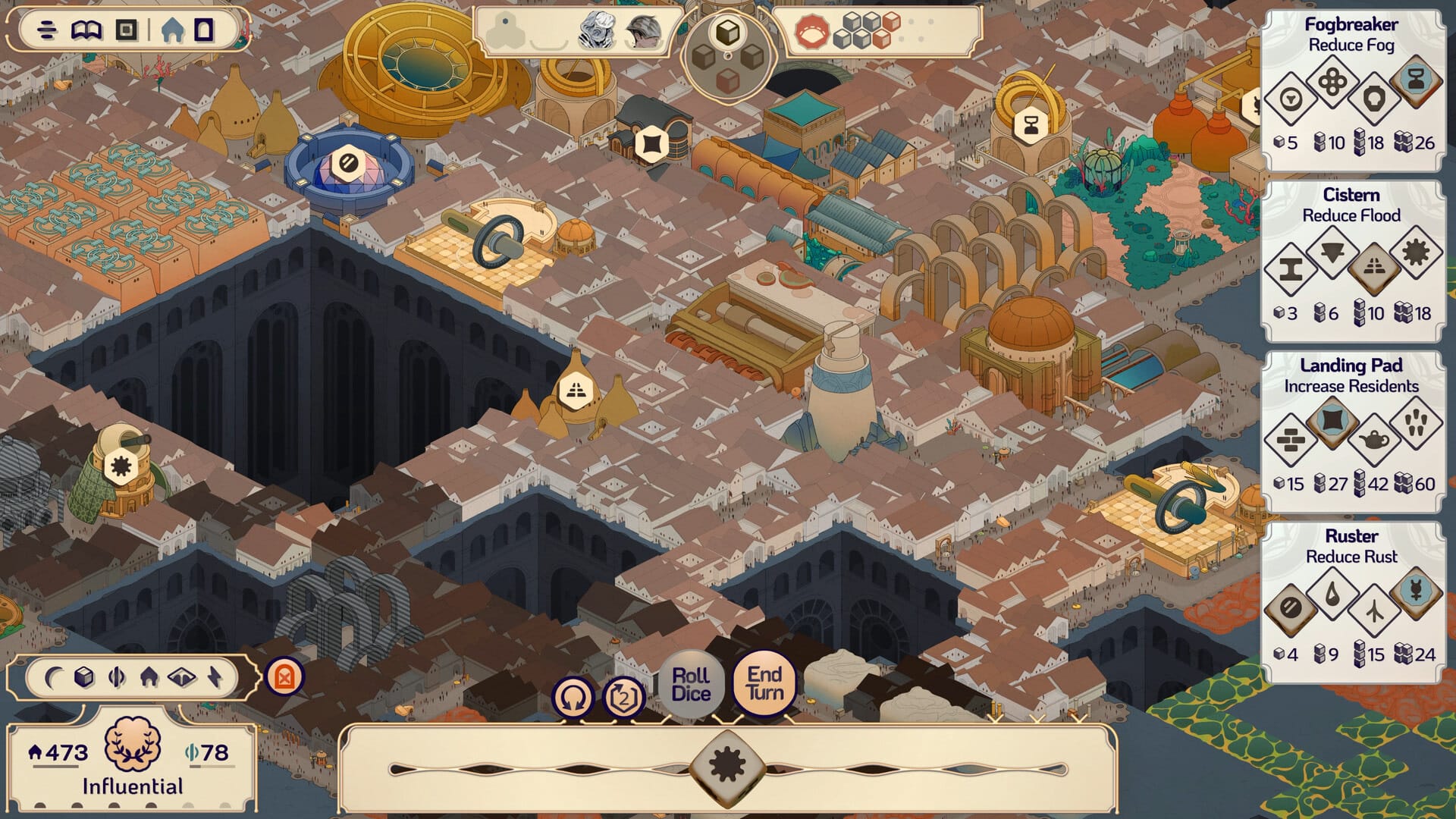
There is a series of simple interconnected systems that poetically grow gangly and increasingly interconnected. Amberspire is a turn-based game; its play is split into four phases of a cycle. The first three phases are active. You select buildings to roll their resource dice, place buildings, grow your population, sell resources for influence, or alter the terrain. The fourth is the passive weather phase, where you roll any accumulated weather or instability dice. The surface of the planet will change; sometimes, rust or flood tiles will move or grow, or sometimes the very ground around you will fall away.
Water mixed with amber vgas congeals into a viscous substance, highly reactive to the planet's weather. On the moon, pools spread quickly but seem to be harmless. - Adanne geological report
- Cistern description, page 27
I love the weather mechanic, especially when some buildings can have a one-in-six chance to add a weather die to the pool. Oftentimes, I’ll end a cycle with anywhere between three and twelve weather dice that are constantly changing the terrain around me. Every few cycles, the weather on the Sixth Moon of Amber changes, providing new layouts for the weather dice and new environmental hazards to contend with.
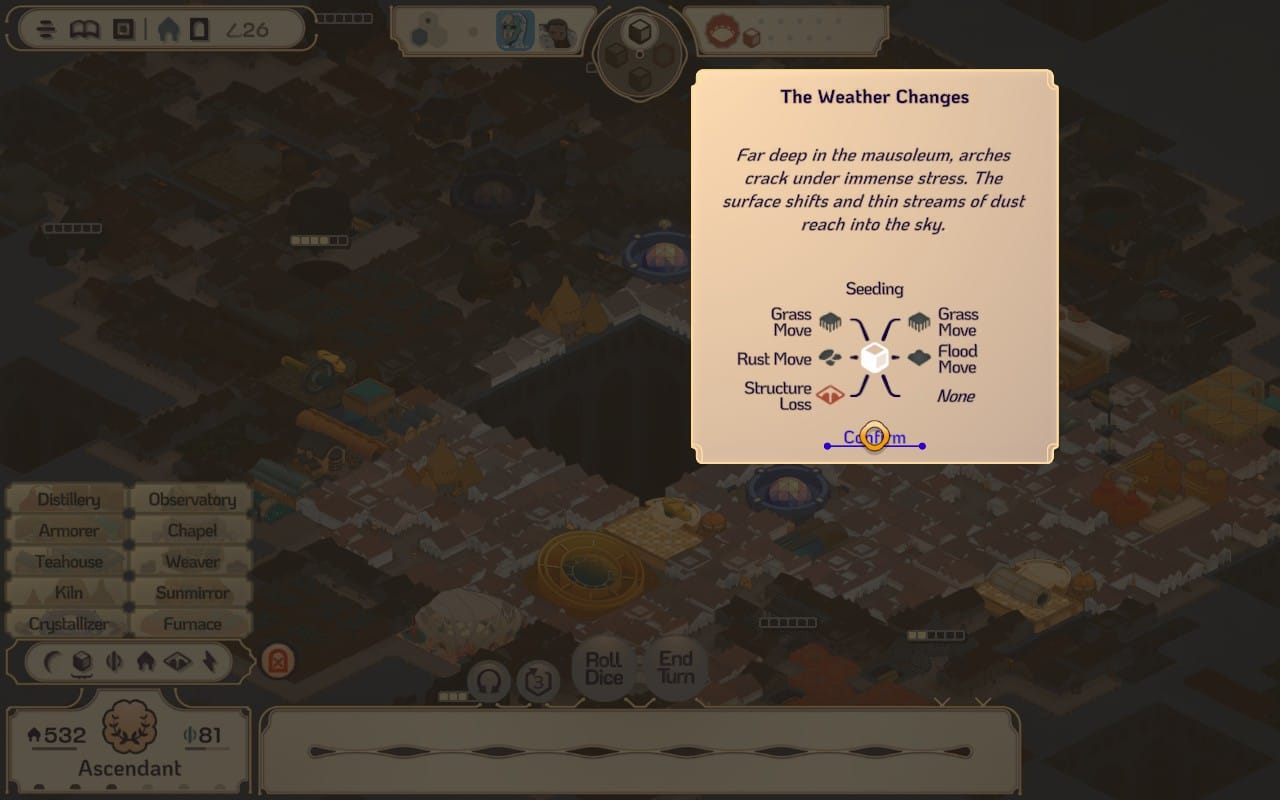
This rhythmic pattern of three action phases and one weather phase sucked me in quickly, creating a relaxing level of flow I haven’t experienced in a game since Dorfromantik. For the most part, weather outcomes aren’t catastrophic enough to require deep contemplation of resource expenditure, and I often find myself eschewing efficiency in favor of what feels right. My city is not optimized—though I know it could be—and I’m okay with that. The city I live in isn’t optimized either.
Your goal in Amberspire is to grow your city and achieve Sovereign status (the game’s final tech level). To do that, you need to increase your population and accumulate enough influence to level up your city. Each time you level up, you’ll gain access to a varied collection of lovingly designed buildings, all of which come with their own resource dice that grow more and more esoteric as you play.
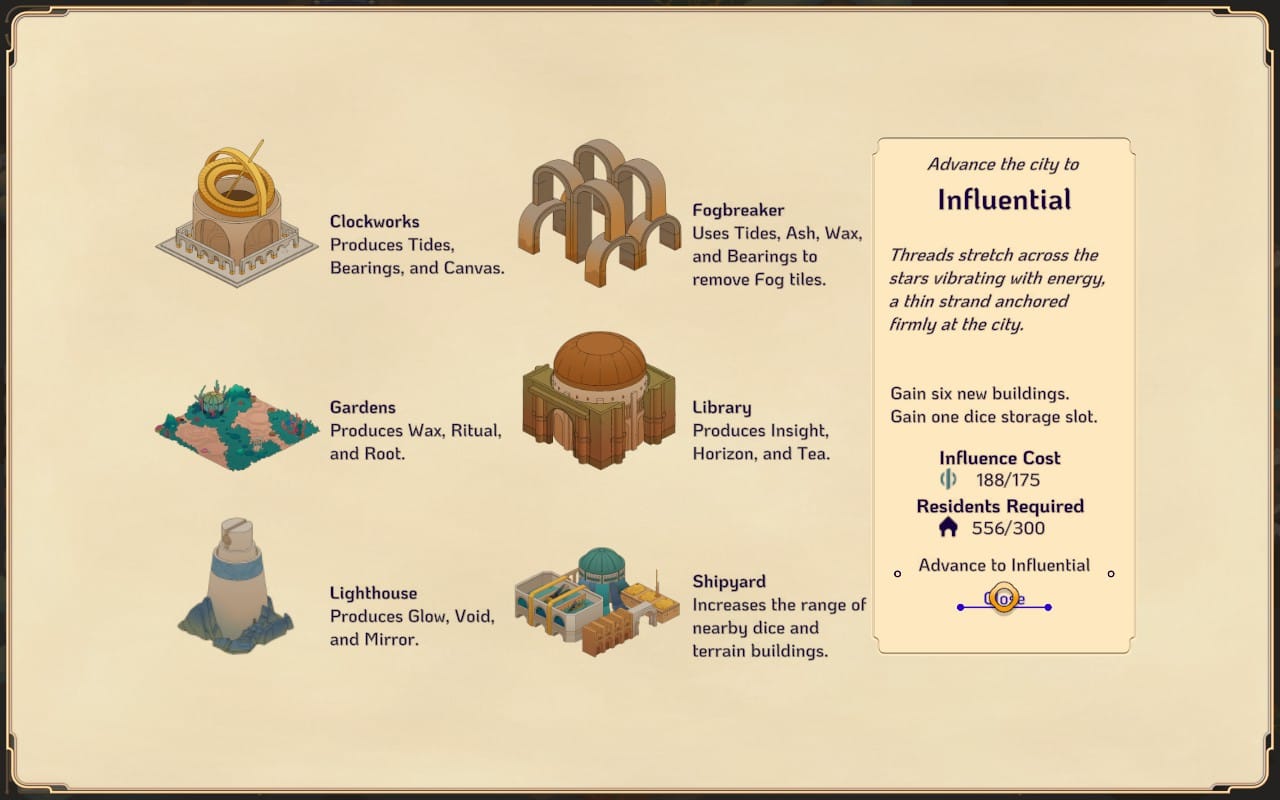
Each turn, you select a collection of buildings and roll their six-sided die. Some die are simple, containing things like Metal or Scrap, while others contain Quiver, Ritual, Root, or Gathering. You spend these resources on new buildings, unlocking new resources, means to push back weather hazards, or sell resources for influence, all in the hopes of reaching that Sovereign status.
Three by three spoons, inlaid with Cetan silver. Bowls and saucers grown at the turn of the century. A plain kettle, a patina of vortices carved into it. - estate catalog
Teahouse description, page 36
You will need to build multiple versions of the same building as your city grows because, importantly, buildings have a confined radius within which their resources can travel. The Bricks from this Kiln cannot travel to the other side of the map, so you need to create an overlapping network of support buildings to make the new ones. Sometimes that means you’ll place a building where no buildings can support its growth. Luckily, Amberspire makes the necessary (or lacking) connections obvious, and there is no penalty for deleting an unconstructed building.
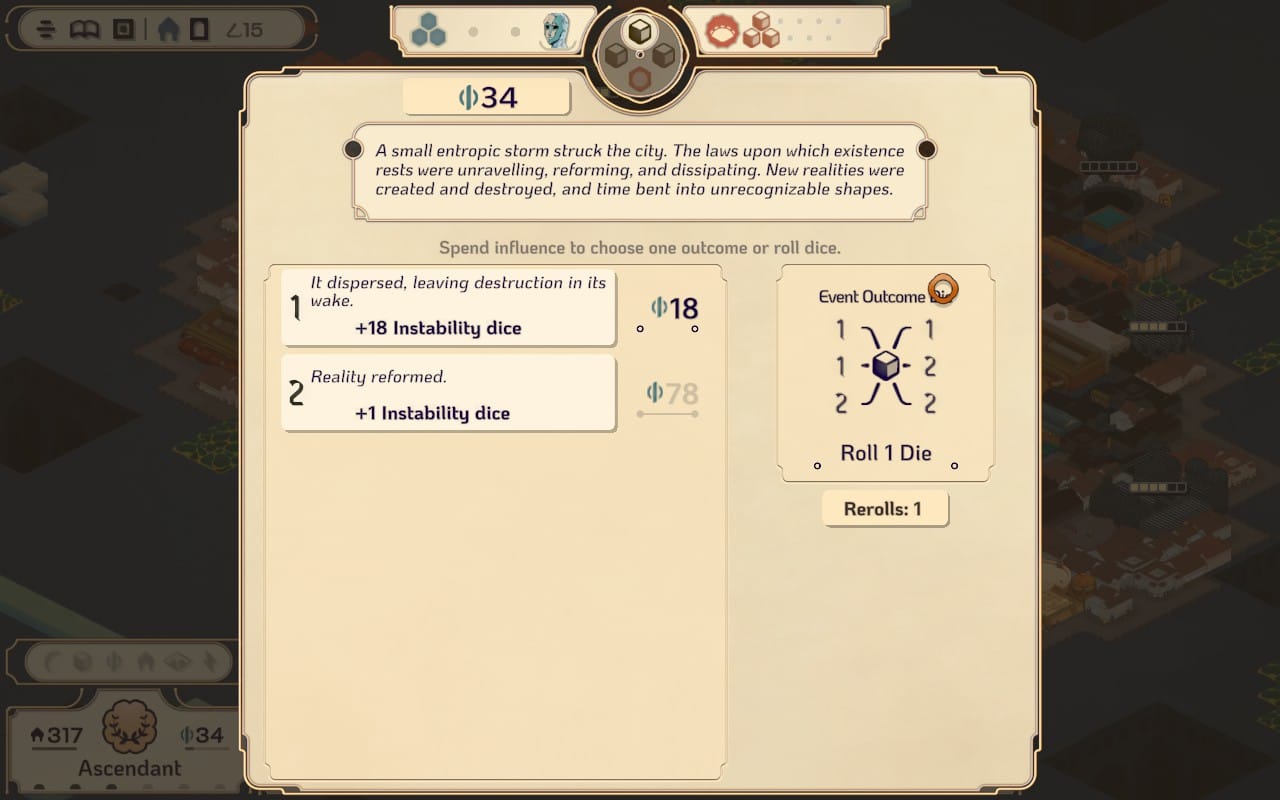
Around the second level, you unlock the Events mechanic, which adds an entire third dice mechanic to manage. If you spend three resources that have a blue background, a world event occurs, which can include the appearance of a new alien, a problem with the city, or an event elsewhere that can impact the people or cultures that make your city home. You’ll use your influence to choose an outcome, or, if you lack the influence to spend, you’ll roll a number of dice and let chance decide.
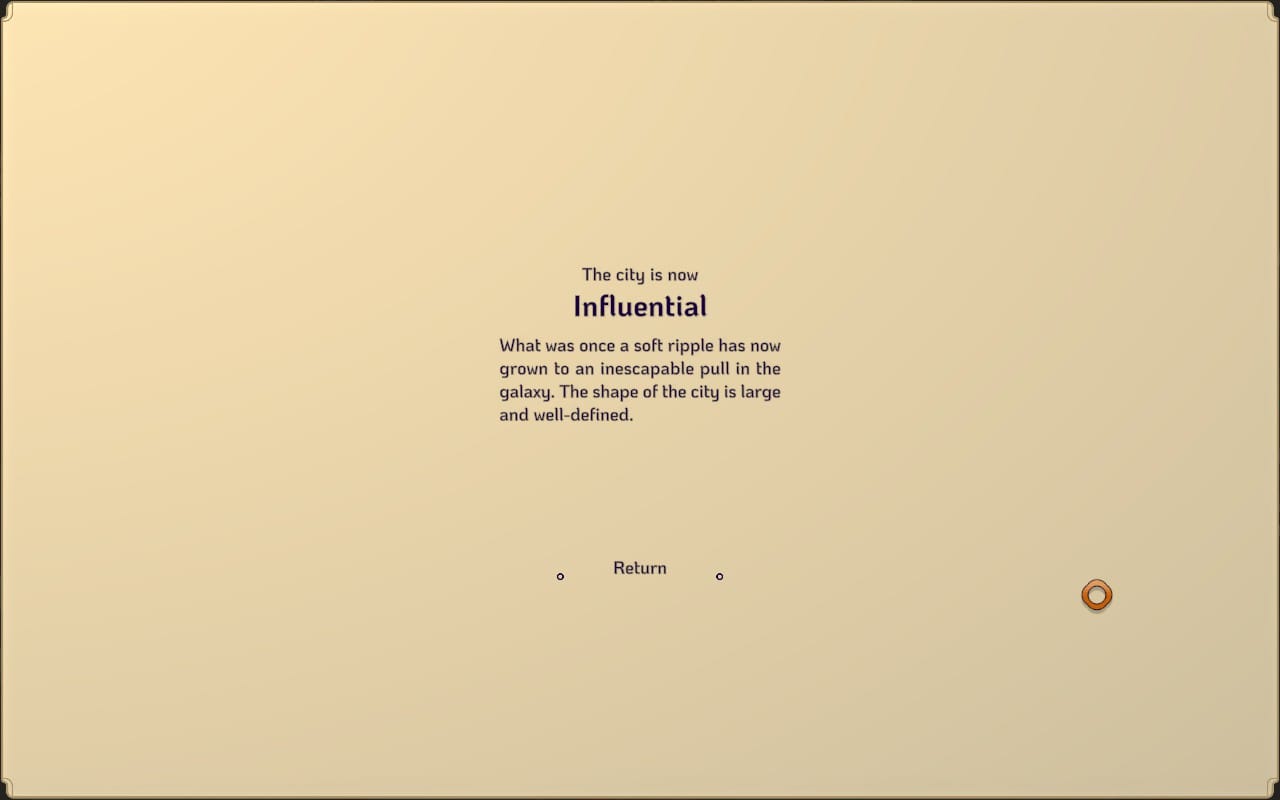
Especially in later game play, almost every cycle I’m contending with a new world event, but, as much as they draw on my city’s influence, the cadence of events never feels punishing or frustrating enough to get on my nerves. Many times, my city has been on the brink of rising from Ascendant to Influential, only for an entropic storm to sweep through the land or a Teahouse is destroyed.
There are solid choices to be made, but I never mechanically feel like I can’t claw back what was lost. What I love about each event, though, is how well they’re written and how each one shapes the people of my city. It’s a soft impact; gameplay is rarely affected beyond the event die roll, but choosing to lose a Ruster isn't an efficiency choice anymore, it's a roleplaying one.
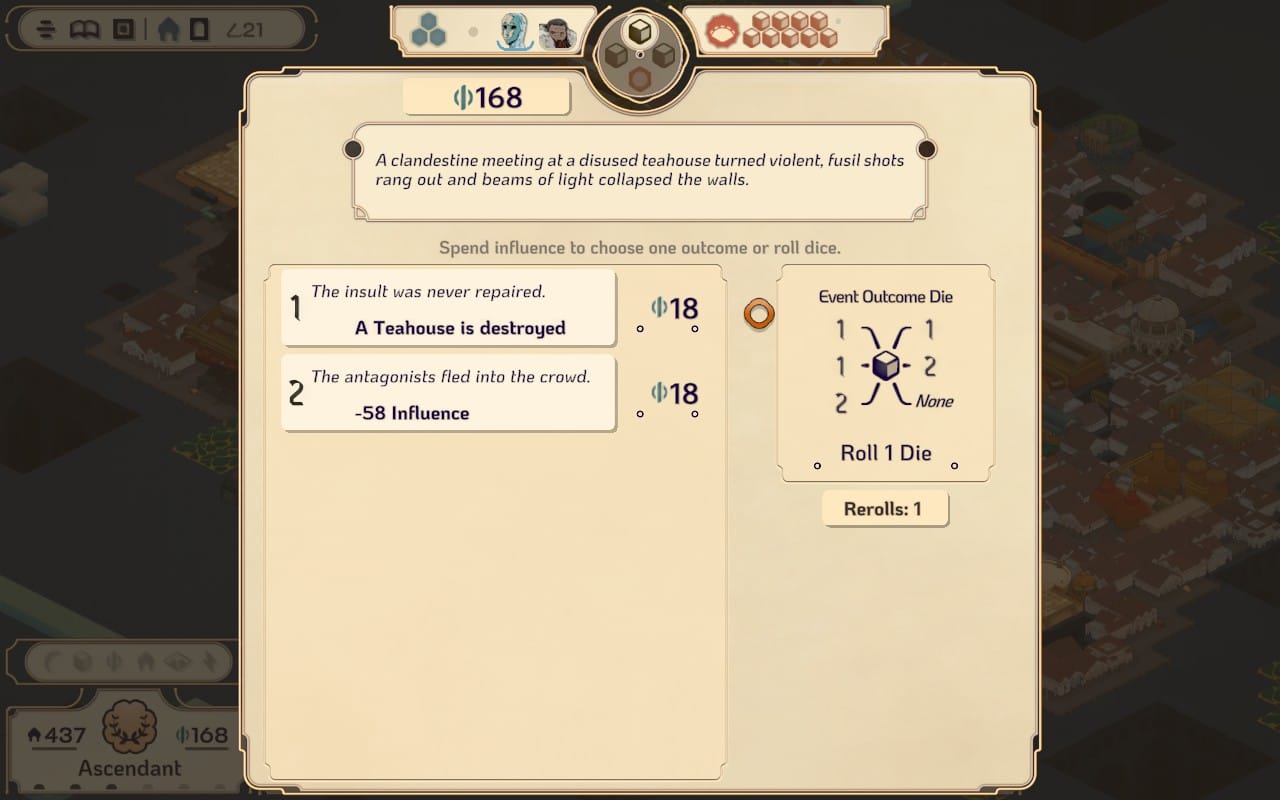
I couldn’t help thinking of Citizen Sleeper while playing Amberspire. Because of how the resource dice are formatted, I rarely got all the resources I needed to continue my public works project in one season, let alone a cycle. Often, you'll need to think on the fly, cashing in materials for Influence instead of construction progress.
Wealth is waste. - Old Imperial proverb
Palace description, page 60
But, paired together with how esoteric some of the resources are, my city was vibrant and alive, its streets filled with Gathering, Rituals, and Music. Resources are ephemeral, typically only lingering for the season, and yet they felt seasonal to me. The resources became stories about the city, not just a means to an end.
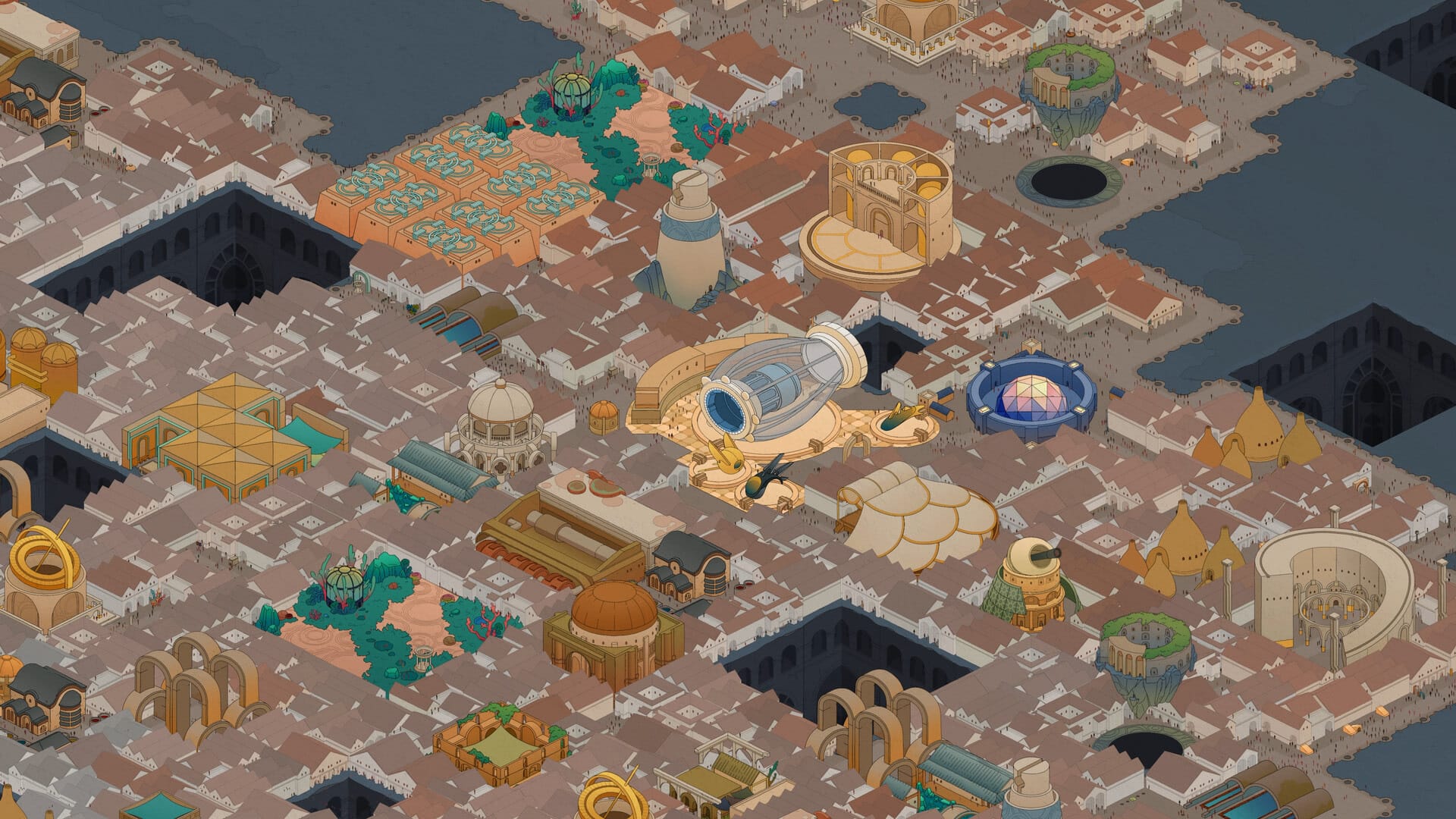
If you’re going into Amberspire expecting a robust city builder with complicated systems and expansive tools, I think you’re going to be disappointed. There’s just not enough fine control of city systems and zones—for instance, residences appear according to a favorability mechanic that is only slightly in your control—and I think that’s okay. Where Amberspire shines, and what keeps me coming back day after day, is the stories the game sets me up to tell of this bustling little town that sprung up on a mausoleum moon.
A small entropic storm struck the city. The laws upon which existence rests were unravelling, reforming, and dissipating. New realities were created and destroyed, and time bent into unrecognizable shapes.
- Random event from Cycle 16
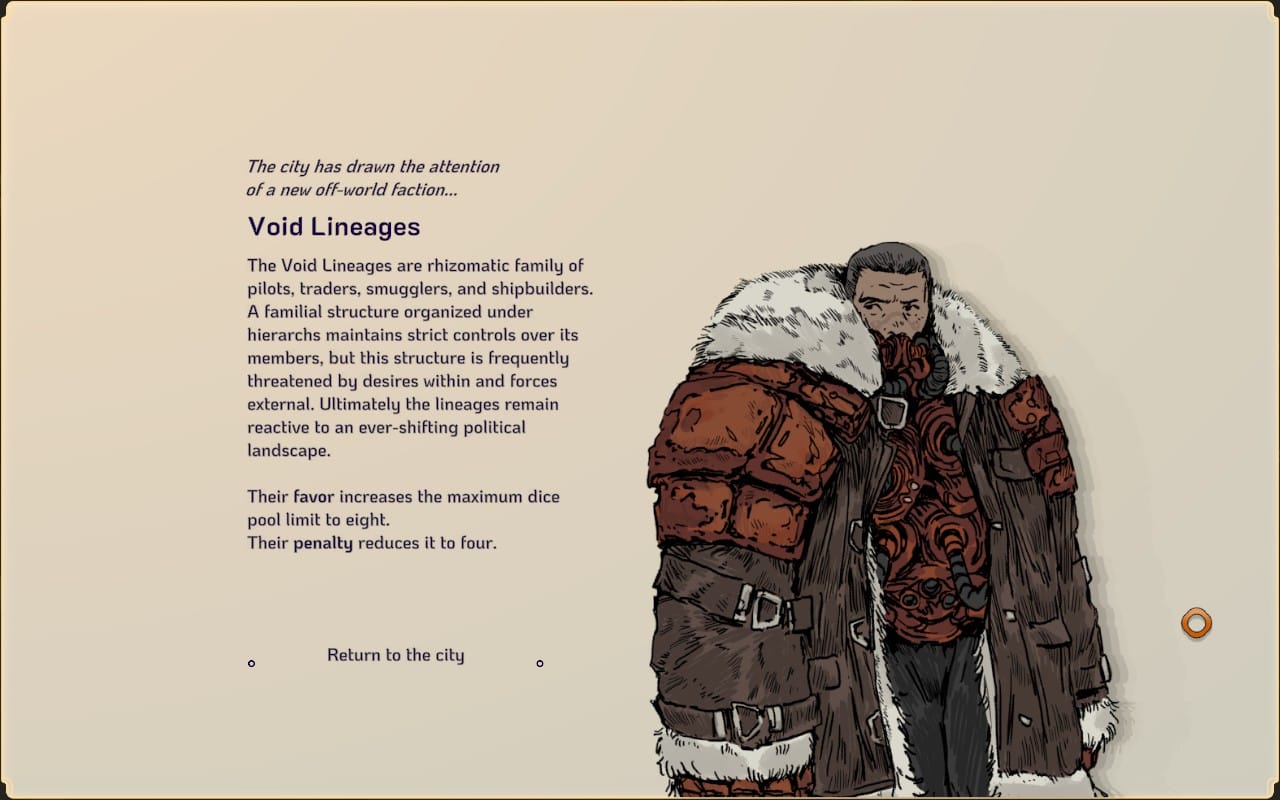
Story is sparse in Amberspire, so you’ll often have to bring your own storytelling to its moment-to-moment play, but the moments that are there are three-sentence science fiction premises that have my mind racing. When you combine the events or building blurbs written in the in-game manual with the esoteric resources bursting from your buildings, what’s left is a game deeply interested in the random mechanics of culture and life. It is a masterstroke how evocative a single paragraph about a new off-world faction can be.
This is also as good a time as any to bring up the manual itself. Whether you plan to play Amberspire or not, I highly encourage a flip through the manual. You'll always have access to it in-game, but Bithell Games has also posted a free PDF including 90+ pages of rules, mechanics, lore, and gorgeous art. The manual also includes 50+ pages of Nic Tringali's development diaries (also available online), diving into the process of making this behemoth of a game. When I received the review code for Amberspire, I was traveling away from my computer, so, for probably the first time in twenty years, I was able to swipe through a game manual like a kid on his way home from Blockbuster.
My time with Amberspire was improved by flipping through the manual, specifically the opening few pages. The tutorials are cludgy or brief, so going into the game with a working understanding of how dice and building construction work saved me a bit of frustration. Bithell Games sent me a copy of the physical manual (available on Amazon for $6), and while I don't think it's a necessary expense, I'm glad to have the artifact. I still rely heavily on the in-game manual, relegating the physical one for fidgeting moments, when my day could be enriched with a random bit of lore.
I’ve seen middle-of-the-road reviews since the launch, all filled with valid criticisms about how the dice mechanics can quickly stymie the simplest of projects. And, while I agree that it can grow frustrating if you're playing the game to win, I actually think that Amberspire isn’t random enough.
Often in the late game, you’ll be rolling six to eight resource dice, hoping to get the resources to build a Library or Sunmirror. You may get a few resources you can use, but it’s not uncommon that a few resources can't be used to build or turned into influence; they disappear into the aether. It can be defeating or just downright annoying to watch your Chapel roll Ritual for the third turn in a row when you really needed Crystal instead. That frustration isn’t about efficiency, though.
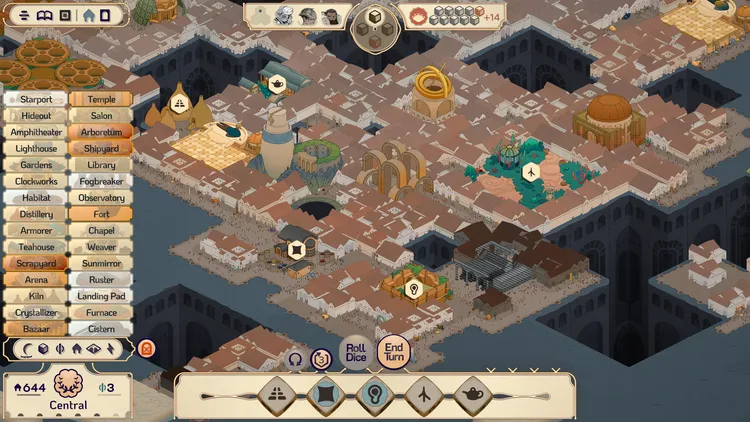
Amberspire, by its heavy reliance on dice, is signaling to you that it is more of a tabletop game than citybuilder; the rich world and exquisite storytelling read like blurbs written on a collaborative environment-building game you play with a deck of cards. It’s this comparison, especially to something like The Ground Itself by Everest Pipkin, that Amberspire feels lacking. The longer I play, the more I see moments a tabletop version of Amberspire would have accounted for: planet-scale clocks that tick up for weather that influence the people (too many floods force a canals-based city instead), or abandoned resources are secretly counted in the background and influence the sector of the city or events (what does it mean that music is generated, then discarded in this part of town?).
I stood in the center of the armil, and suddently felt a perfect stillness, as if the universe rotated around me with the clearest rhythm. - Time and Void, fragmentary recollection
Clockworks description, page 44
I also recognize that asking the small team at Lunar Division to make such a culturally and environmentally rich world reactive to dice dynamics like that is unrealistic. That is the realm of imagination and dreams. As such, Amberspire ends up being a game about filling in the gaps, both physically and metaphorically...and what a rich tapestry you can weave.
There are just enough story beats and esoteric weirdness to light my brain up, dreaming up imaginative stories and ponderous questions I want to dive into. After a stressful day, I want to cozy up with Amberspire and roll the bones, seeing where cosmic chance and cultural happenstance take my city…and I wouldn’t have it any other way.