Songs of Glimmerwick is playing all the right notes
There is something very Studio Ghibli about Songs of Glimmerwick. It may not seem apparent at first—the musical twist on a welcoming Harry Potter world does little to suggest something like Kiki's Delivery Service or Princess Mononoke—but beneath the magical school trappings, it is a heartwarming coming-of-age story about community.
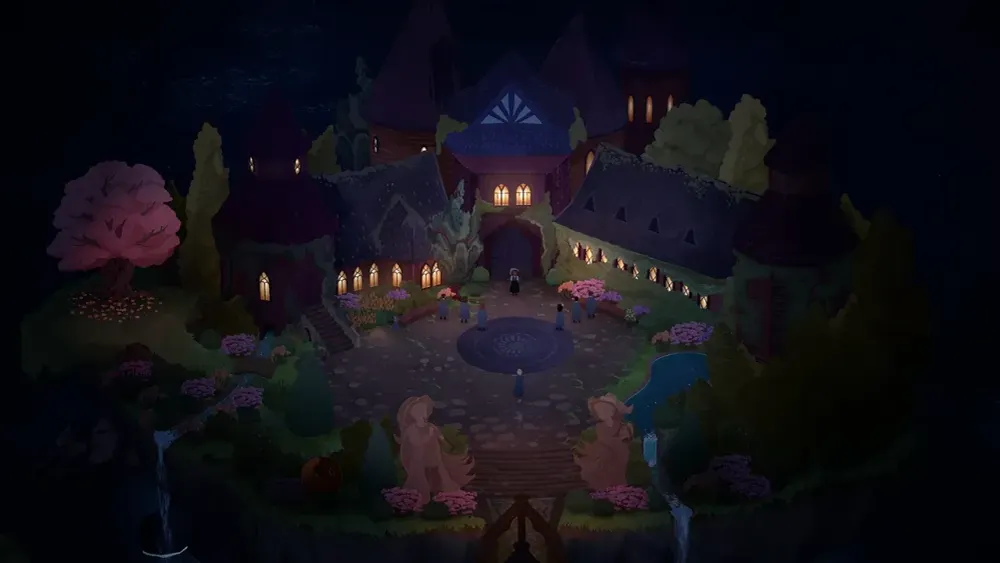
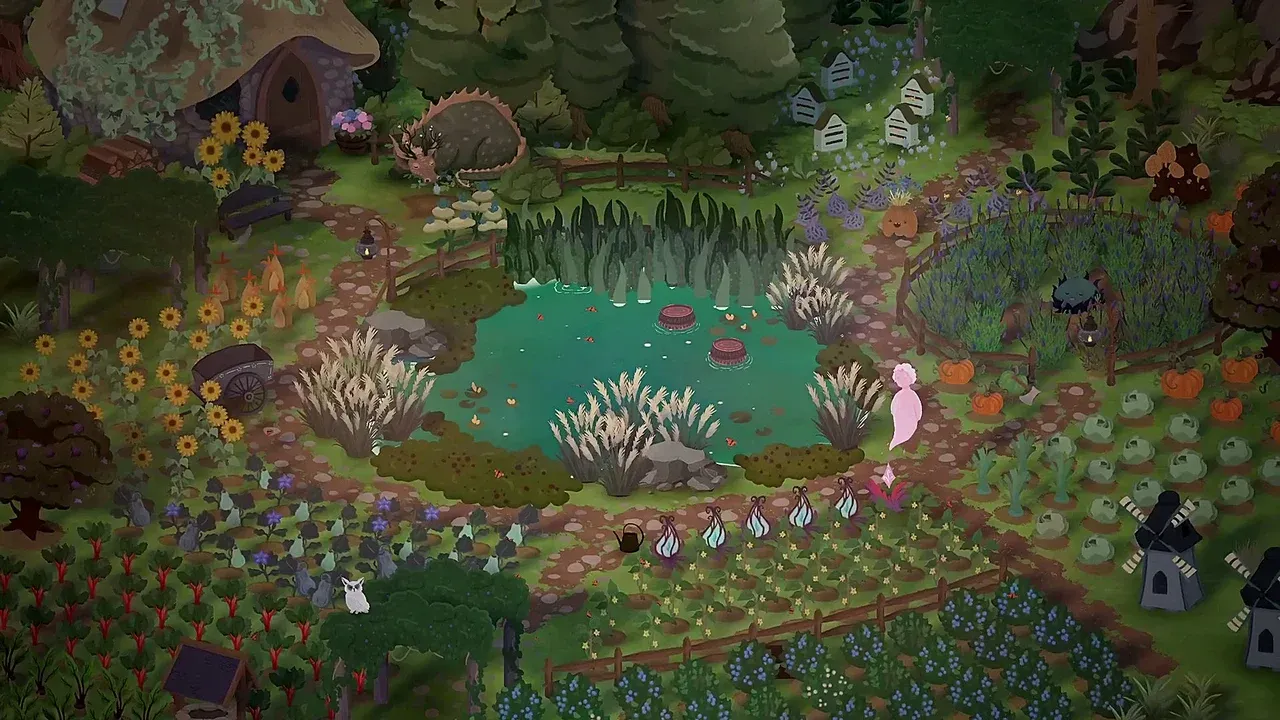
Songs of Glimmerwick, at its most mechanical, is a life sim. You'll create a character, gain admission to the Etchery, the magical school that teaches you to cast magic spells with a flute, and quickly become the maintainer of the school's garden. You'll buy seeds, help villagers, sell baked goods, go swimming, fish, and explore the untamed wilderness surrounding the Etchery and Wick, the bustling village.
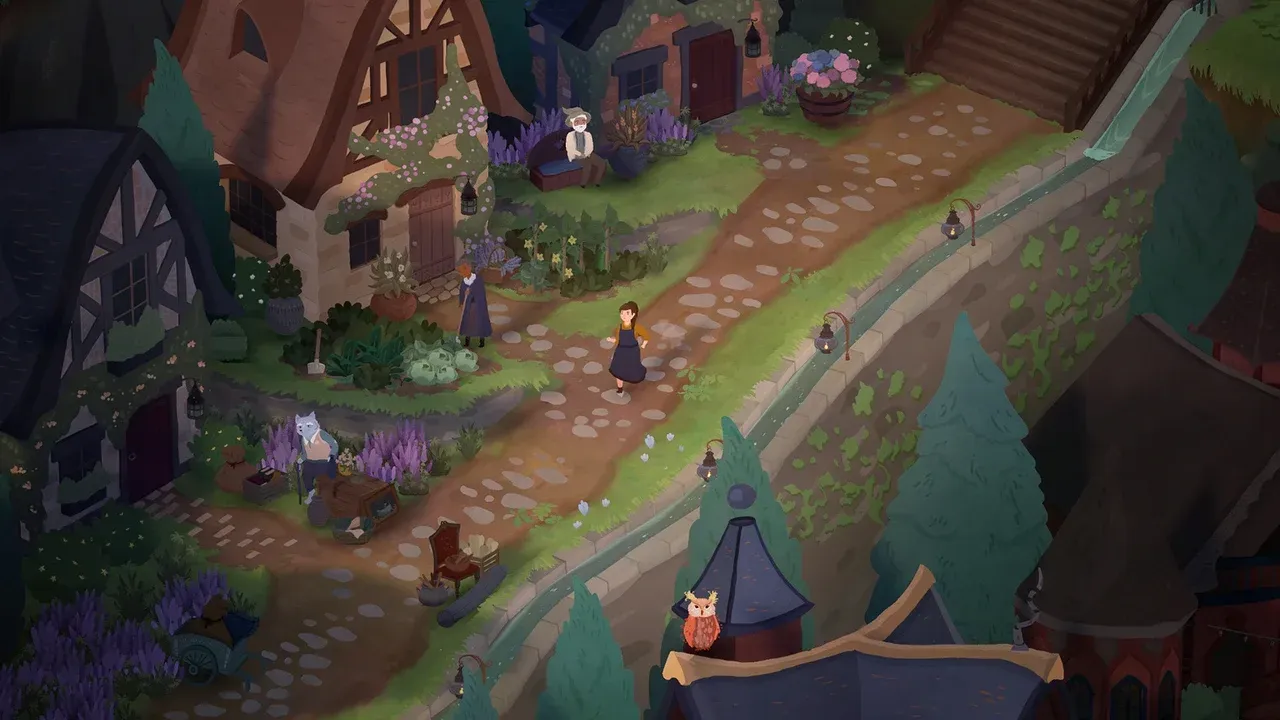
But, as a student, you'll also attend classes that unlock new potions, spells, or skills, you'll meet a diverse array of students and ghosts, explore the Fairie woods, and do a whole host of events, quests, and foraging. I'm at about 50% completion at the time of writing, and the only expected life sim things I haven't seen yet are any form of character romancing or combat trials. And honestly? I love the game for it.
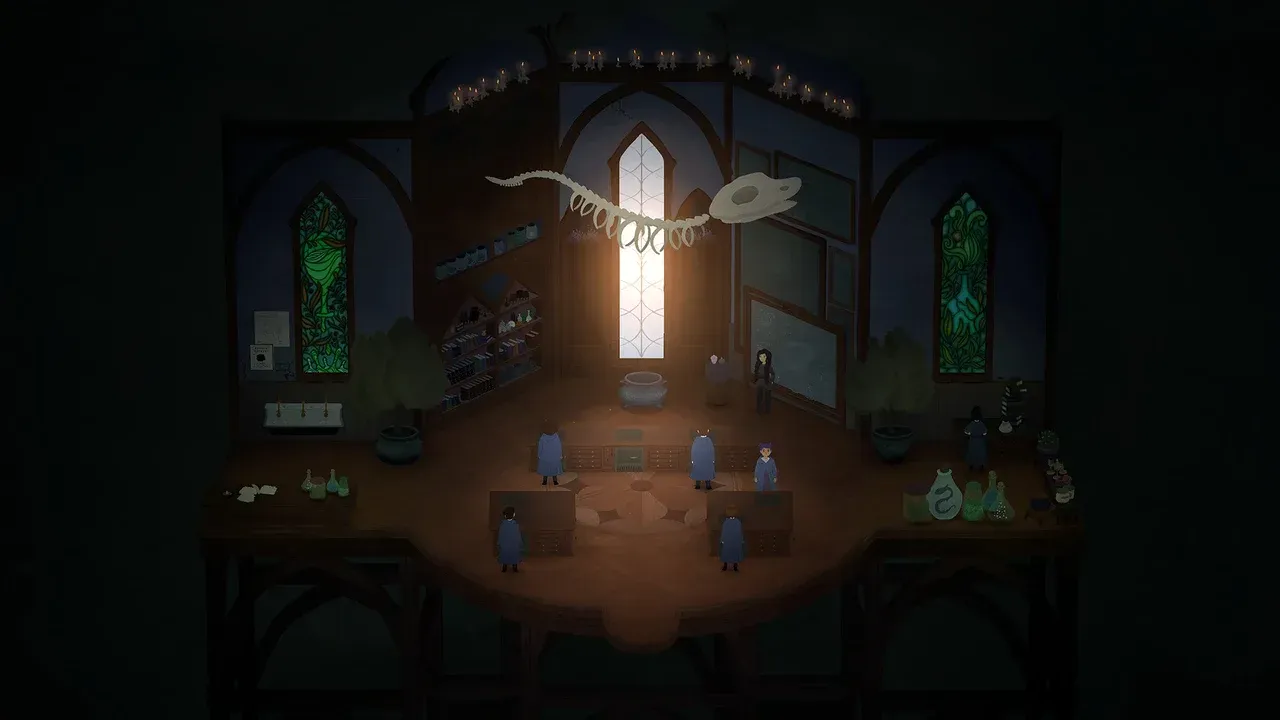
I grew up directly in the crosshairs of the Harry Potter boom; I was reading the books as they were released, my age almost perfectly lining up with Harry's. And, while J.K. Rowling's status as Chief Garbage Person has basically tarnished that world for me forever, I still do have fond memories of dreaming about Hogsmeade or running to class to learn the new coolest thing. That majesty, that dream, is revitalized in Songs of Glimmerwick, a game so much more concerned with how magic affects the world and the people within it than any Chosen One narrative. The quests you complete will keep the mill running or supply fish to a werewolf retiree who just wants to paint. Sure, you can chuck your crop of marjoram into the well in your garden to get paid the next day, but when crops are worth the same price no matter where you sell them, why wouldn't you take a trip into town to chat with the seed vendor instead?
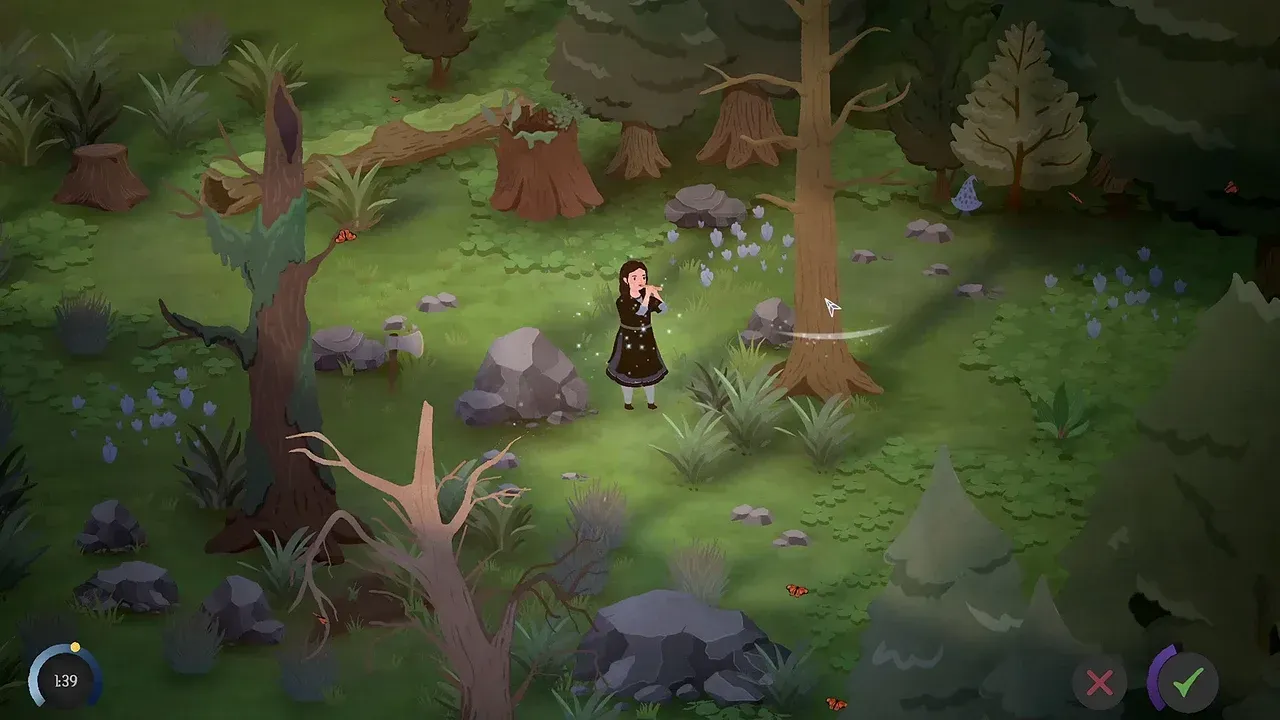
Glimmerwick, by design, wants you to poke and prod at its corners, unpestered by the systems and mechanics of most life sims, including the two most aggravating progress gates: time and stamina. Songs of Glimmerwick has a clock that, usually, ticks from 6AM to 10PM. However, after 10PM, the game simply switches to Night. You can spend as long as you'd like at night without consequence. You won't pass out from exhaustion, the shops remain open, and you're free to explore any area unrestricted. On days with events—whether it's a class, a game of Forests & Fairies, or the end-of-season festival—time will progress to the event and then stop. You'll never forget—or just miss—the Sea Festival because you were too busy watering your crops.
I can just live in this moment and experience the beauty before me
I can conjure up a player or two who may be frustrated by this forced involvement in the game's events. They'll exclaim, I assume, "I just want to farm marjoram! Why must I meet the merfolk and swim and learn a spell that does something really cool!" The answer, dear reader, is quite obvious: because it's fun. Classes are quick, typically provide you with a new tool to use in the world, and end with mini games. Bigger events like the end-of-season festival in Spring are filled with items to buy, new spells to learn, and plenty of fully-voiced dialogue between students and residents. Every bit is an absolute delight.
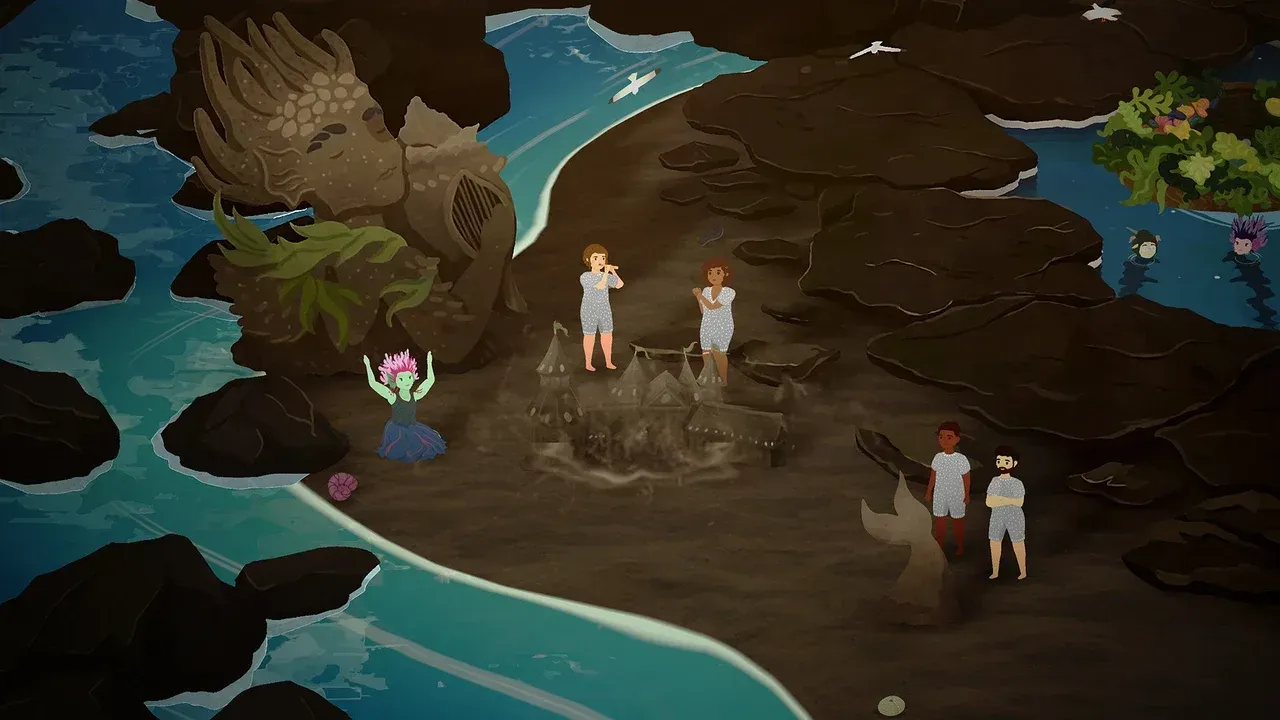
You can end the events whenever you'd like, but, especially with the Forest & Fairies events, I'm enthralled. The voice acting is incredible, the music is evocative and beautiful, and the writing is good. And, because the game pauses time during these events, I'm never afraid I'll miss something or feel this urge to mash through dialogue to get to my crops before I pass out. I can just live in this moment, experience the beauty before me, and learn more about the people, places, and cultures of this delightful world.
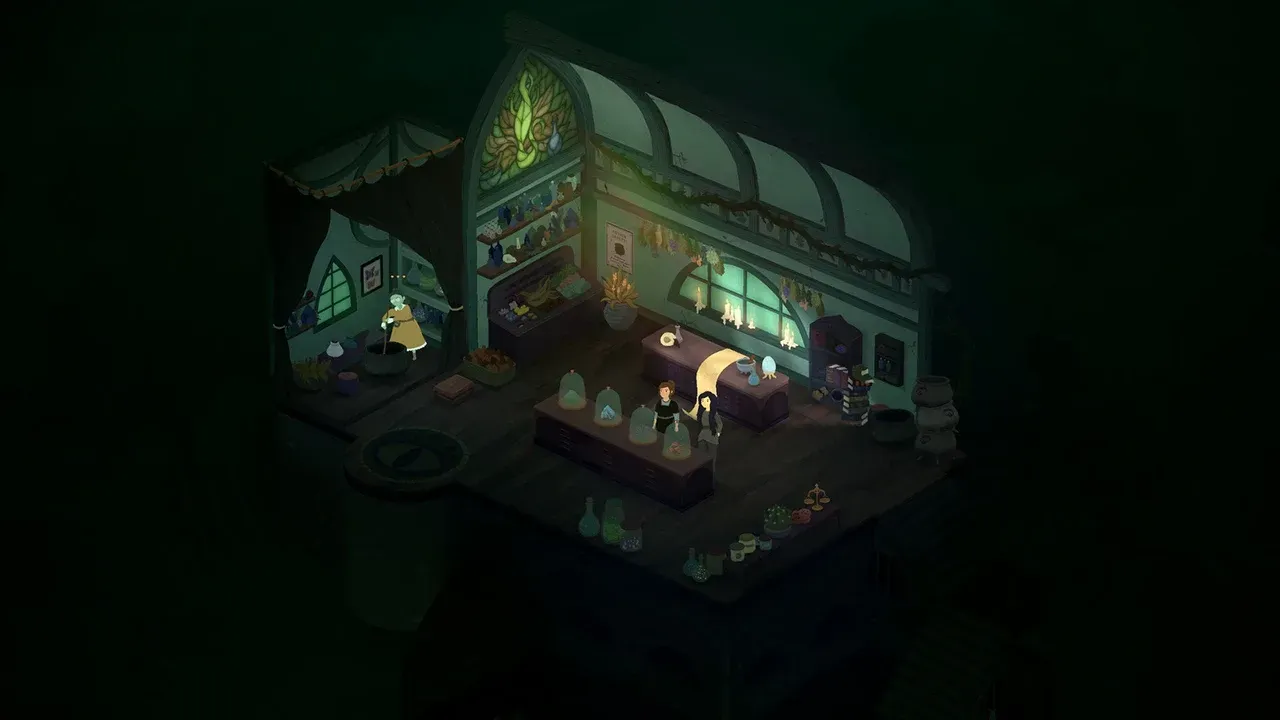
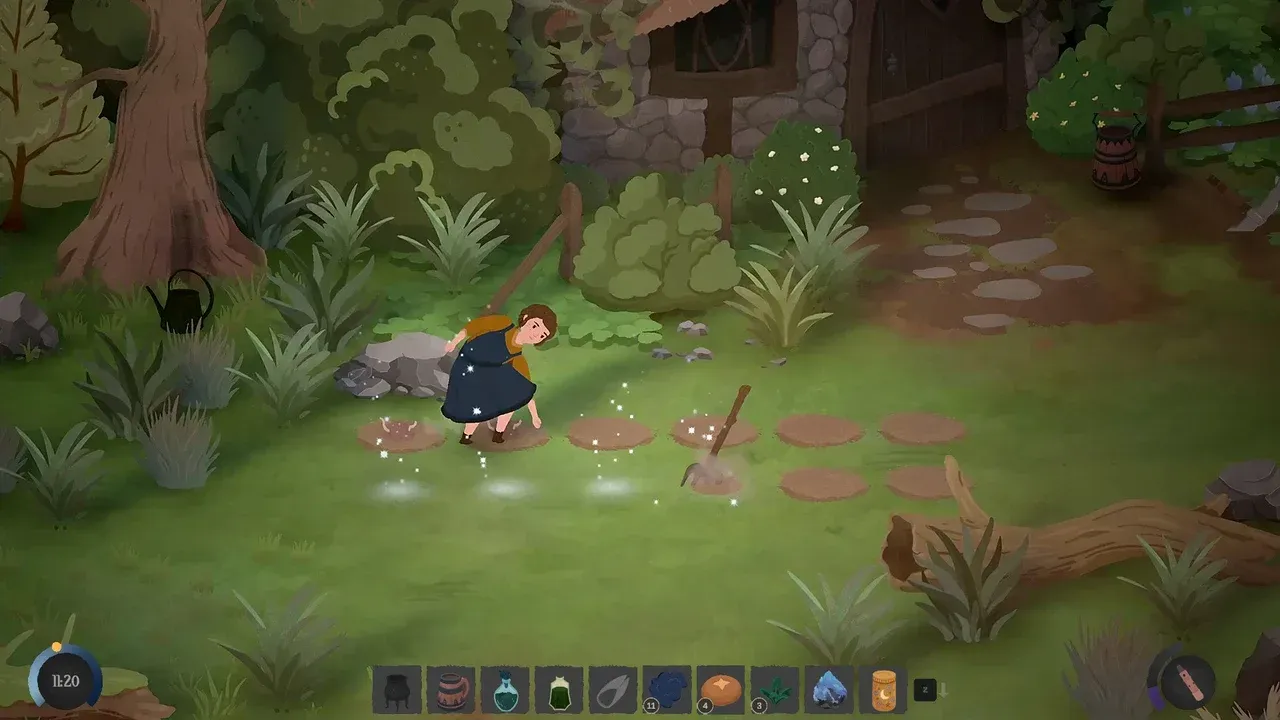
Some of the only friction comes from its stamina system, a much kinder, more relaxed version of the one you'd find in a typical life sim. Most farming tasks are done via magic. Cast a spell with key presses on your flute (like Ocarina of Time, actually) or select an option from the quick select menu, and you'll use mana to dig holes, chop down trees, or break boulders. But, besides a few spells needed for traversal or finding hidden items, this is where the stamina pressure ends. Harvest plants, brew as many potions as you'd like, bake bread, or spend the entire evening fishing to your heart's content. You can, in a beautiful piece of player friendliness, water your plants free from stamina costs. The spell that makes it more efficient will consume mana, but picking up your trusty watering can is free.
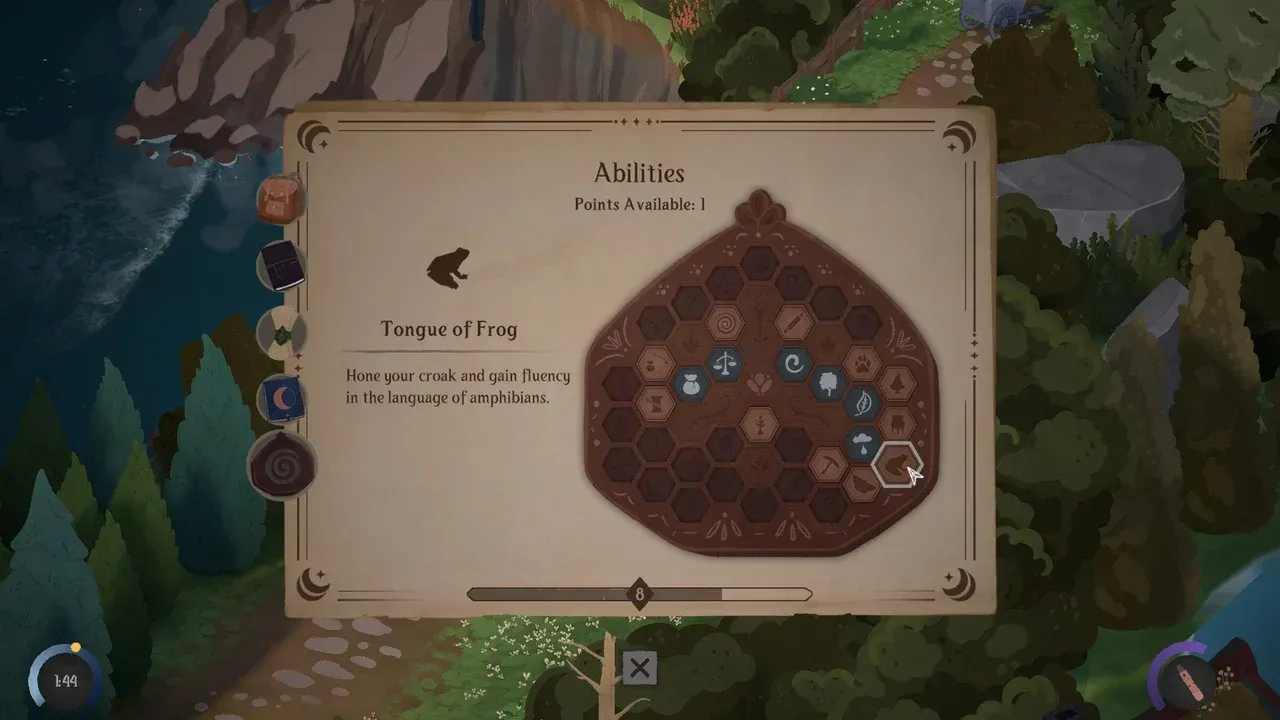
Truly, the only full stop block I've run up against in Songs of Glimmerwick are when I've exhausted all the quest steps or harvested all the ingredients, fish, and diving holes for the day. Which is very much by design because, odds are, your Herbotany class the next day will unblock something and help you progress...which then provides experience points to unlock new skills (like a new carpentry level or the ability to speak to frogs??).
There are plenty of spaces for self-expression and skill mastery, though. There are plenty of fashion options, a mirror that lets you change your personal experience at any point, and event-specific items to find or buy. How you lay out your farm can be as random or orderly as you'd like; I've found myself placing lavender bushes around my stone pathways, instead of neat, orderly rows, but if an orderly row or a ring around a sprinkler plant is more your speed, you can do that too.
Everything up to this point is the best life sim I've played. The loop of farm-to-sell-to-seed-to-farm is engaging and as deep as I need it to be. When farming isn't exciting—or rain waters everything for me—exploring or questing fills in and keeps things engaging. In Stardew Valley, I've had too many multi-hour sessions inevitably turn into "Factorio, but farms," instead of a charming escapist adventure that would make Thoreau drool. Songs of Glimmerwick has nailed that low-impact homesteading, but what keeps me coming back isn't the farming; it's the story.
You learn in the game’s opening sequence that there is a rich history magical history in this world, one that was horrifically ended by a Cult of Silence. The cult swept up all the musical instruments and sought to police and end all magic. Even humming and whistling were outlawed. There was a resistance led by a prominent figure who ended the reign of silence by burning down the forest that fed the world’s magic. You also learn that this reign of terror only ended a handful of decades ago. Some of your classmates lived in this era. Some of your classmates’ parents are still practicing members of the cult.
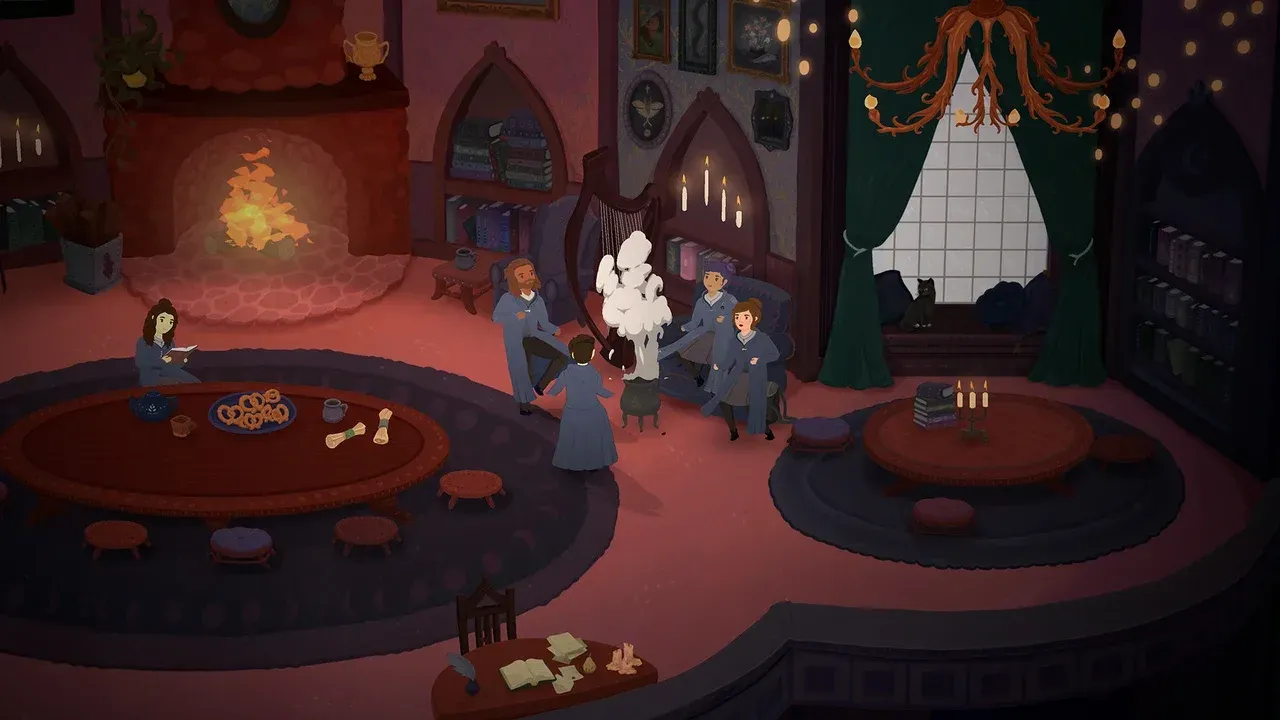
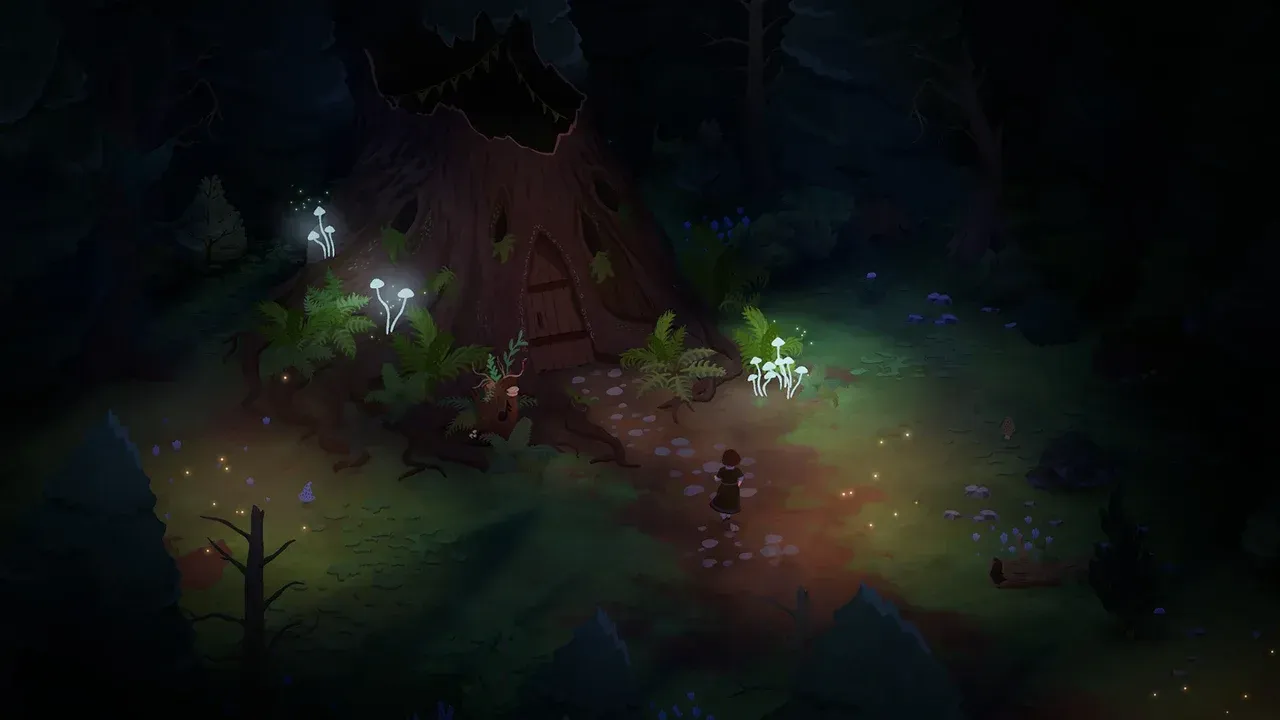
Your path through the game is, yes, partly to chart your own way as a student and a gardener, but you also are gallivanting into the magical forest to diagnose its disease. There is charm here: cute little owls in vests hop around the mushroom-filled forest, but there is also the clouds of spores so thick you choke.
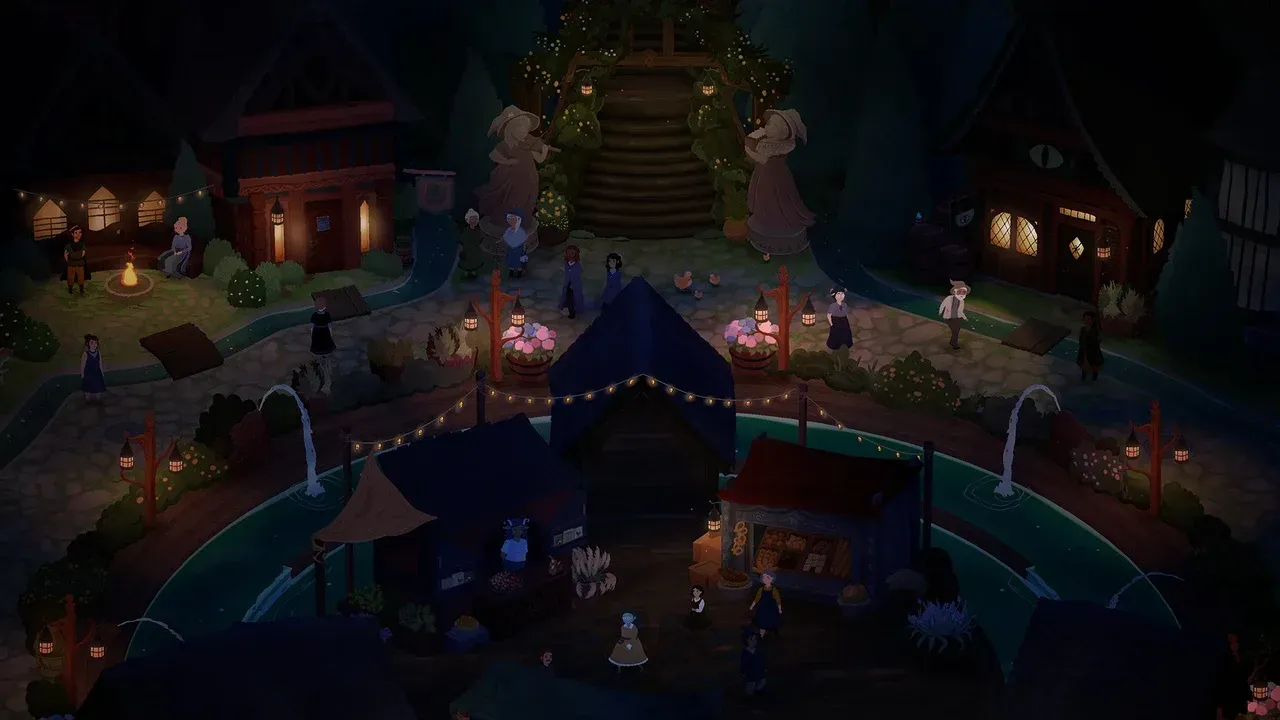
Overwhelmingly, I want to spend time in Songs of Glimmerwick for the escapist fantasy of being a young student who can, truly, make a difference in this world. I’ll help the miller un-curse his mill; I’ll help that beekeeper witch get her bees back; and I’ll do it all while choosing to not scam this wizard at market day and solve the mystery at the heart of the forest. I practice the Rock Band-esque spell minigame because it is fun, yes, but also because it makes sense to pursue excellence in a world where magic was outlawed only forty years ago.
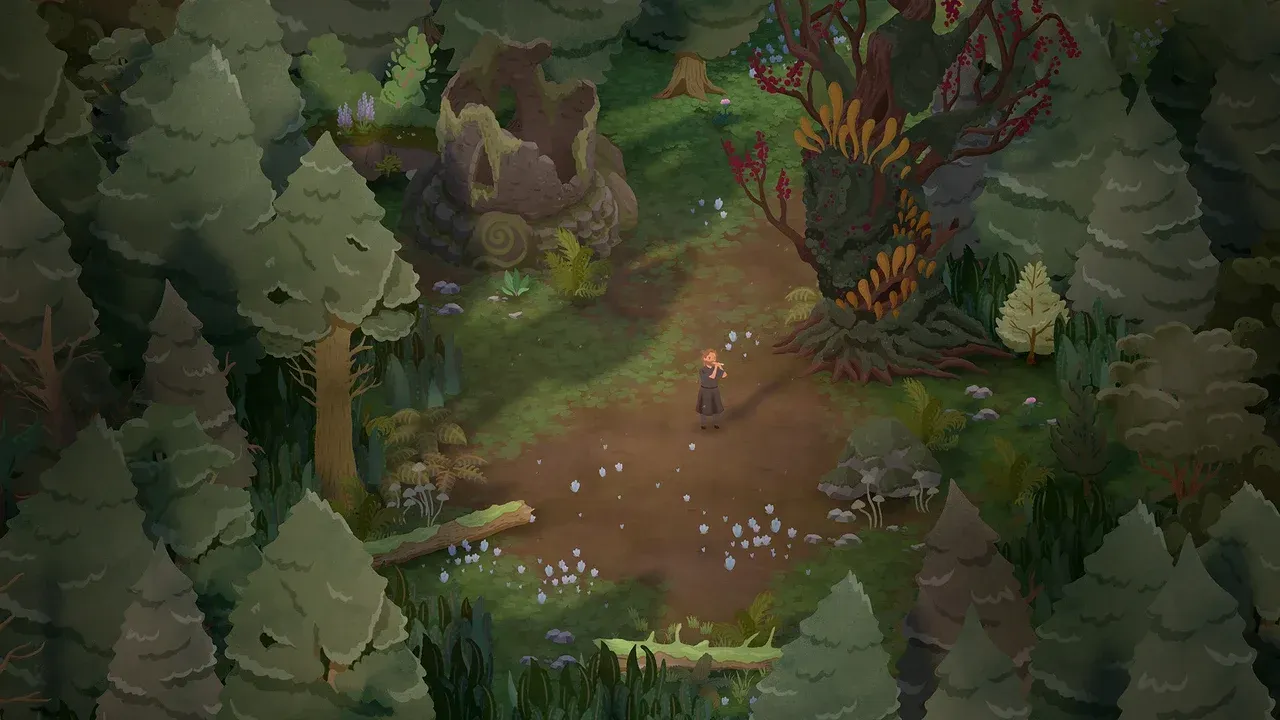
The lack of a romance mechanic begins to make a lot more sense when the stakes of the world revolve around acceptance and community action; I’m not here to feed blueberry buns to one person to fill their meter and trigger the marriage cutscene. I’m here to be a part of a community. The same could be said for the lack of a combat space (at least around the halfway point); Glimmerwick isn‘t interested in violence or duels. It’s interested in building the proper habitats in your garden to welcome pets. Wick has a tarnished past—one that resurfaces early on—but every quest, every person, every interaction is about moving forward together.
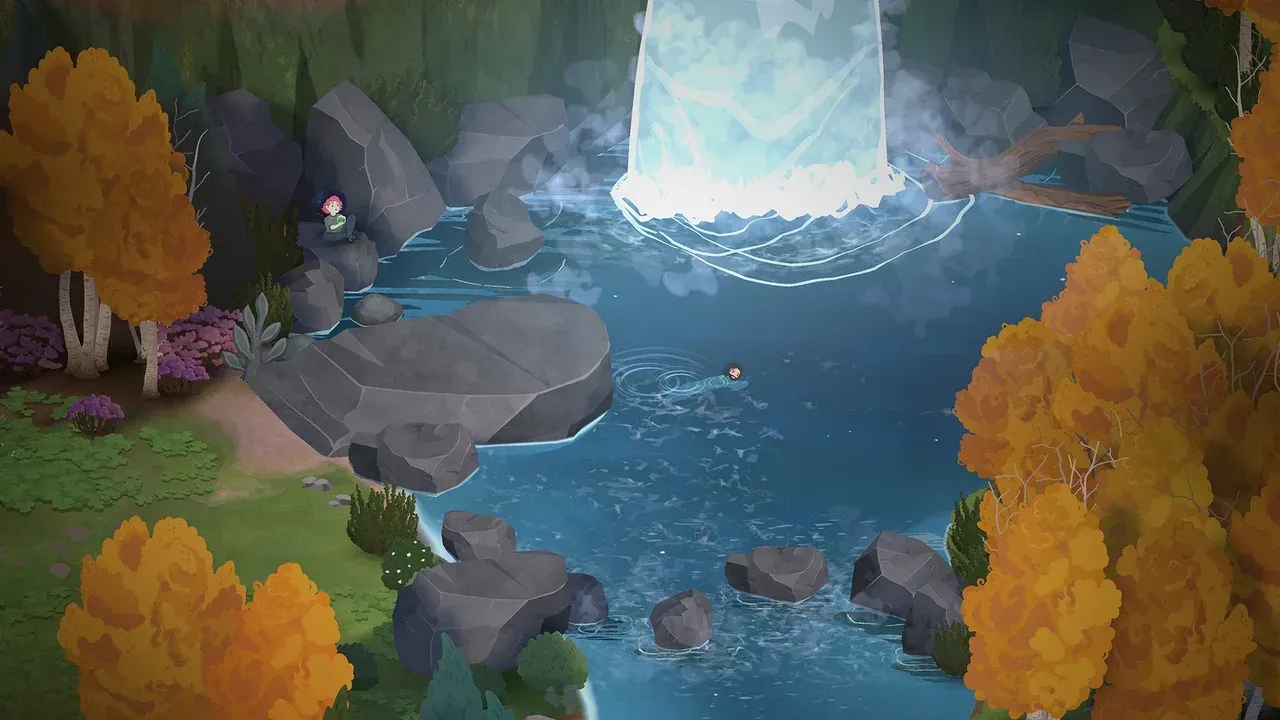
I continue to be amazed by how tightly designed Songs of Glimmerwick is. Around every corner is a fun story to discover, an awful joke to hear (lovingly), or way to wile away the hours as the crickets endlessly chirp. I can’t put Songs of Glimmerwick down. The town theme plays in my head constantly and I’m always excited to see what is going to happen—or what I’ll learn!—this week. And really, when was the last time a game made you excited to go to class?