
The deadliness of memory
On a recent flight, as is my new tradition, I picked up a Poirot novel, this time settling on a used copy of The Haunting in Venice, a novel retitled to correspond with the Kenneth Brannaugh Poirot film of the same title. The introduction of the novel, written by the film's screenwriter, explains that Hallowe'en Party, the novel's original title, was used as little more than inspiration. Some character names remain the same, but a childhood Halloween party in England is set in Venice and updated into a high-stakes séance. He begs for Christie's forgiveness.
Hallowe'en Party is a later Poirot novel, published in 1969, 49 years after The Mysterious Affair at Styles, Christie's first Poirot. The novel is everything you expect from a Poirot: logical, methodical, surprising. But there's something else in there: a very overt feeling of nostalgia and a fear—or disdain—for the current day. To Poirot's witnesses and friends, 1969 is a dangerous time where there are more murders because there are fewer societal rules. Women date more freely, men are less restrained by decorum, and children are constantly being abducted. I cannot overstate that almost every person Poirot interrogates has an opinion on the current state of things, and it is almost always dire. There is this toxic form of nostalgia that Christie is injecting into her primary characters that, to a modern audience, feels ham-fisted at best.
I cannot separate Hallowe'en Party (and it's introduction) and Galley House. To have a magical device that transports you, in perfect clarity, to the past, to see how fickle, selfish, and vindictive these humans are, and then to watch the same story unfold in the modern day is a humbling affirmation that we have always been like this. We simply choose to let the memory fade. Humans do it for personal gain, for glory, or for love, but the moment you are confronted by the revived memories of what you've done in stark clarity, you die a little on the inside.
I find comfort in reading Christie novels. They are simple and repetitive in construction, almost always following a similar formula (how else do you publish as many novels as Christie did!). There is nostalgia when reading old detective fiction, and a transportive sense of "ah, the halcyon times of the 1930s, so different from our own." But even when these novels are written contemporaneously, they are fabrications. Melodrama. It's not real. Their societies, characters, and conflicts are hazy archetypes that bear little resemblance to reality. Especially in the later novels, I find it hard to believe that 80-year-old Dame Agatha Christie had her finger on the pulse of what it was like to be a primary school teacher.
What was the Butler's name again?
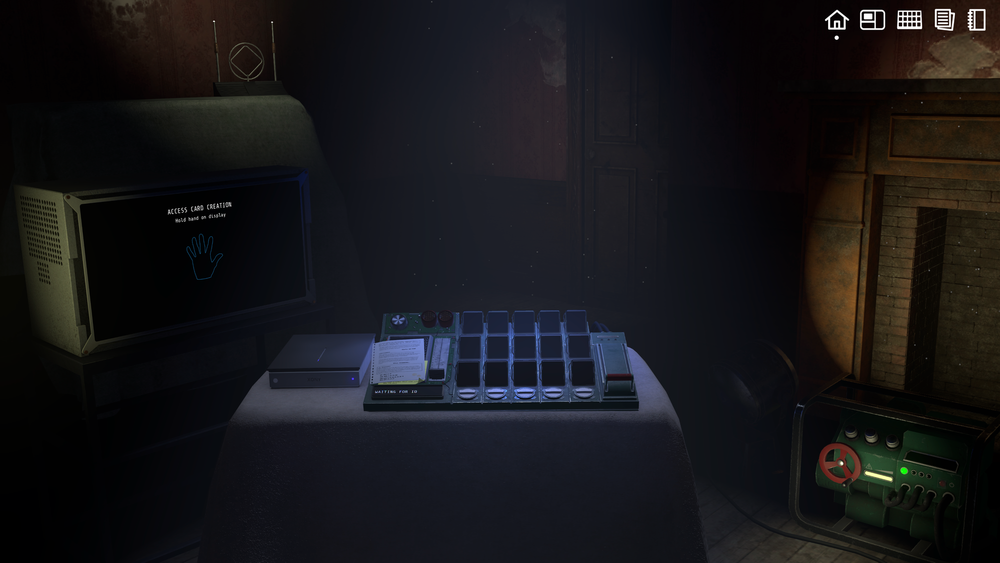
I keep returning to the notion of ephemera and nostalgia when I think about Galley House. I finished the game a few weeks ago now and have moved on to other mysteries: Dreadline Express and Death at Fleming Manor. Characters in Galley House—what was the Butler's name again?—have disappeared, their memory erased with the press of my Steam Deck's power button. The story and people and moments of Galley House are reduced to headlines and screenshots, while I plunder my brain trying to remember why I sent that friend an all-caps message about this game being a game of the year contender.
But it's gone. Not all of it, but a lot of it. Lost in the press of "what's next." All that remains is the sentimentality and the nostalgia of those clever dopamine hits I had solving puzzles. I find this to be the lasting impression and power of Galley House: reckoning with the surge of "experiences" and the onslaught of "content." My memory of Galley House is fading more rapidly than I'd like. The hazy memory of the story already unraveling into tropes and archetypes and comparisons to other, similar media...even though Galley House is, in my memory, singular.
It is so easy to forget. To accept, all too readily, that there is simply a body to be disposed of in front of you. Each discovery of a new corpse in Galley House is met with a moderate amount of surprise followed by a far too easy "well, let's get rid of the body now." Human life—or at least the life of those you don't recall or know—is of little consequence in Galley House. Only when their identities are revealed does the death become important or shocking. You will become increasingly desensitized to characters talking about bodies—objects, not people—to the point of almost farce. Because these flawed, broken characters you've spent hours watching unravel have been reduced to dead weight.
There is tragedy in Galley House; Victoria, a pregnant young woman, realizes that she should know the people dying. Vic begins writing down people's names on a sheet of paper before she dies, ultimately passing the note to her sister, Annie. Once dead, Vic becomes just another body to Annie, though she too begins to take notes on the piece of paper written in the hand of a woman she can't remember anymore. As the living dwindle and the names become increasingly unfamiliar to Annie, she begins to understand: you die if you remember. Put another way, to be remembered is a death sentence. She picks up the gun and kills herself, overwhelmed with the guilt of having forgotten her beloved sister and hoping her sacrifice will end the cycle of death.
To remember is a death sentence.
The last two deaths in Galley House's early timeline are suicides. The supernatural haunting kills almost everyone, but Annie and John willfully kill themselves when they realize what has happened.
To break the cycle is a choice.
The world around us is a violent and deadly one. Deaths around us galvanize people and push for grand actions. We hope that, surrounded by bodies, if we can make them remember, the cycle will end. If we can write the names of those who died on our signs, we will—we must—remember.
I cannot separate Hallowe'en Party from Galley House. Hallowe'en Party, a novel I read during the Halloween season, is about a young girl who is murdered while apple-bobbing. Throughout the novel, every adult loudly proclaims that Joyce was a boastful child who constantly lied for her own benefit. She fabricated memories. One of her last boasts was to a detective novelist, claiming she had witnessed a murder. No one believed her, and then she died. Poirot solves two murders in Hallowe'en Party: the murder of a child and an unsolved case that would've remained so had Joyce not remembered.
Galley House's modern timeline concludes with the destruction of Galley House. There is no supernatural "laying the bones to rest" moment; to survive the curse, you must burn the home down so no one else can remember what happened here. To survive the house—the institution that gained power by absconding with memory—must be destroyed by the only person who perfectly remembers.
But we have played Galley House. Its deaths and the memories of its people lie resting on hard drives. The supernatural thunderclap won't come for you, though the challenge at the end of the game lingers:
Will you remember their names? Will you listen to Joyce when she tells a truth? Will you believe your eyes, believe the perfectly captured footage, and, when you see it, will you burn the house down?
Is The Incident at Galley House a deeply political game invoking George Floyd or Renee Good? Probably not. Certainly not overtly. This murder mystery, filled with sloppy, money-grubbing aristocrats, seems to rhyme much more with classic and modern mysteries than with our modern political environment.
So, I'll beg for forgiveness from the team at Evil Trout by adapting their story in name only, but it is hard—impossible even—to separate The Incident at Galley House from the current times, when the house seems to be perpetually on fire, memory is being recorded daily, invisible forces turn people into bodies, and to remember their names on the streets could be a death sentence.