Assists in MIO: Memories in Orbit are more than difficulty tweaks
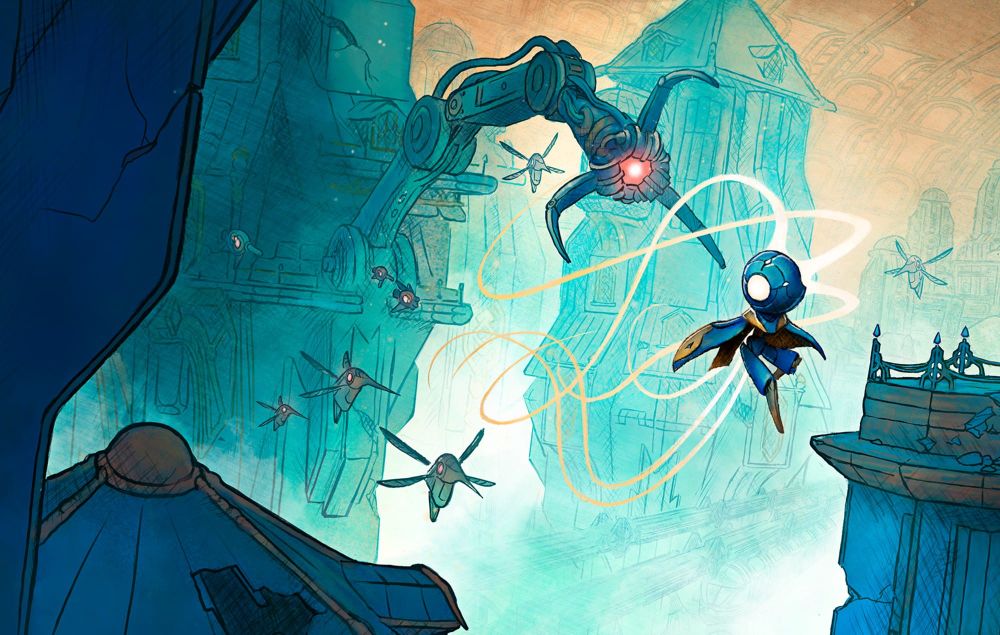
Unlike other prominent souls-like metroidvanias, MIO: Memories in Orbit just wants you (yes, all of you) to play it. Douze Dixièmes, the now shuttered developer of MIO, has created a game I want to explore every nook and cranny of, discover every tiny secret, and perfect the grapple-to-float-to-jump platforming chain.
Git gud? Go’on git.
MIO is a punishing game. You have a tiny amount of health, some truly harrowing platforming sequences, erratic robot enemies, and a player move-set just different enough that even after 20 hours I’m pushing the wrong button expecting a dash. You will die a lot; that’s the point. You also collect nacre, a currency for purchasing upgrades that, upon death, disappears. No corpse-running, it’s just gone. This all sounds familiar; there are so many of these games that came out this month already, not even mentioning the one we’re all thinking of: Hollow Knight.
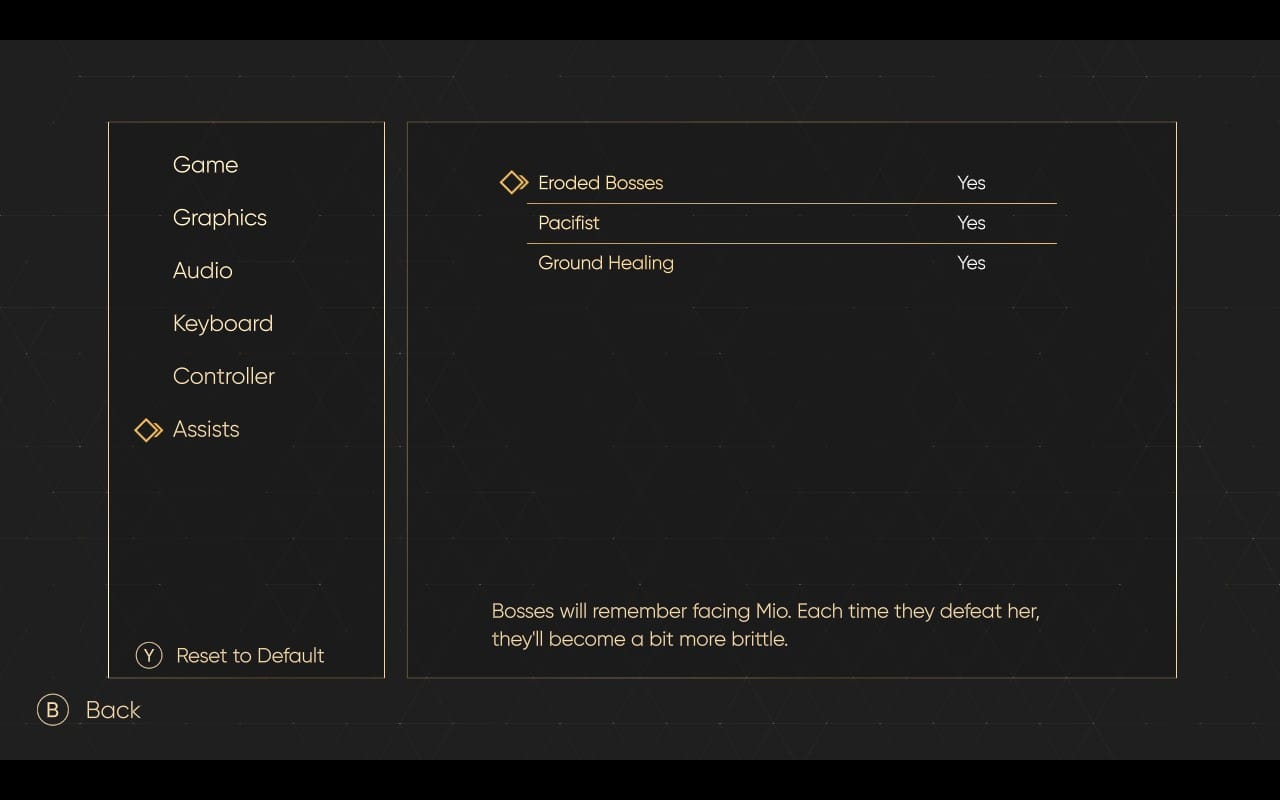
What MIO does differently though, and what has allowed me to play it and find joy within its dour, cross-hatched spaceship, is let me play the game. There are three accessibility settings that people who aren’t reading this post will bristle at, but they are also settings that are genius solutions to the git gud crowd. Let’s break them down one-by-one and talk through why I think more games should explore similar options.
Eroded bosses
Each assist does not mechanically describe itself outside of its name, so, keeping with the souls trappings of the game, discovering how these assists actually assist you is tricky to discern at times. In game, the only difference you’ll visually see is when you die to a boss, instead of the harsh cut to black and respawn, is a momentary splash that reads “Boss has been weakened.” You’d have to flee to Reddit to discover how much they’ve been weakened (and in my case, just to trust that they have been).
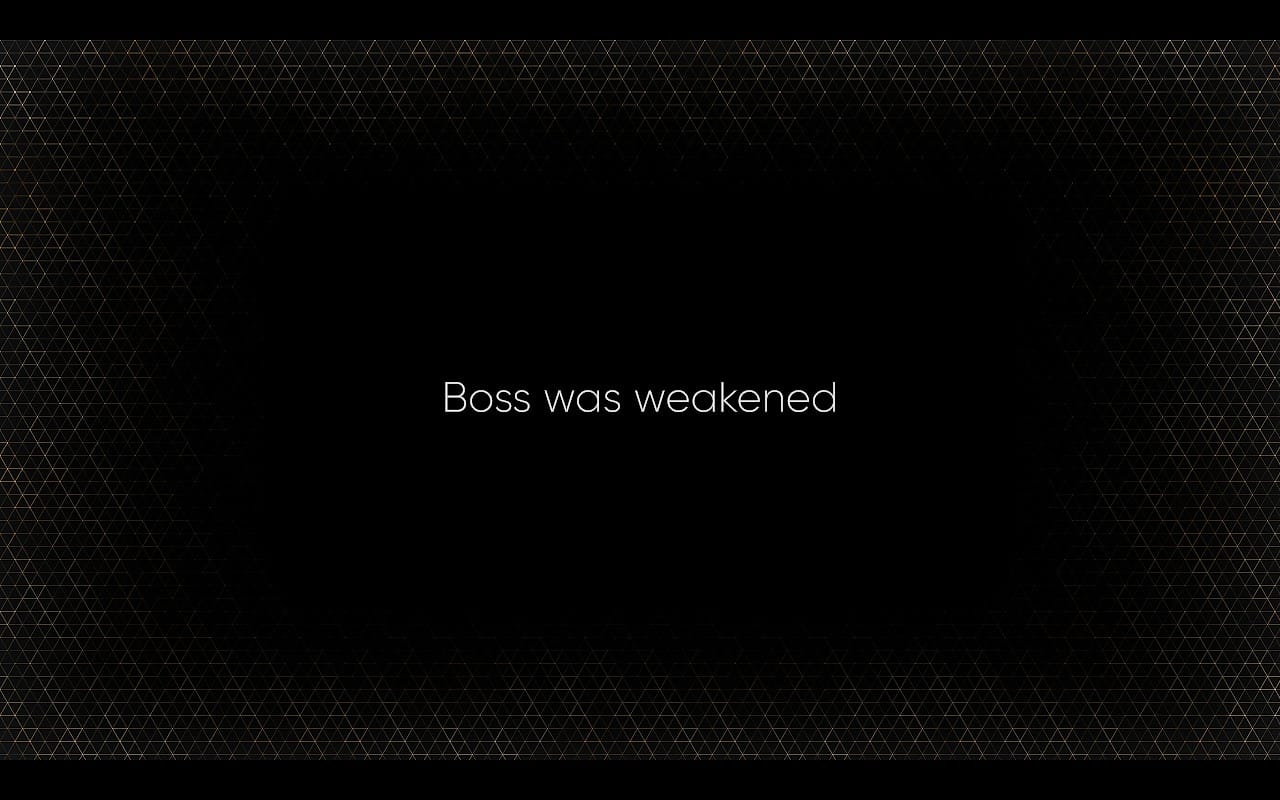
What’s actually happening here is, after every death, your base attack is increasing very slightly. After fifteen deaths, your damage output is capped at 200% your base when fighting that boss. Your damage output may be increased, but your survivability isn’t; MIO is a game as much about dealing damage as it is about doing the right damage. Like many of these metroidvanias, combat is much more concerned with positioning and stamina management than raw damage output.
Zooming out from the stats, I think the Eroded Bosses assist is really doing two important things: the first, and most important is giving you hope. Some of the bosses in this game are real bastards; one particular late game boss duo destroyed me before I could even understand what was happening. But, every time “Boss has been weakened” showed up on screen—even when I failed to land a single hit—I had hope that the next go-around would be marginally easier. Even in death, I was making progress.
I wasn’t focused on winning, I was focused on learning.
The git gud strawman I’ve constructed here will say that learning the boss is all the progress you need. To that I say, yes and. The second thing this assist is doing is letting more players explore and appreciate the complexity of boss patterns. That hope and success I felt after each death compounded and propelled me forward. Every boss-run was a new chance to learn something; I wasn’t singularly focused on winning, I was focused on learning, because I knew that no matter what, I was going to win in the end.
I still needed to learn the patterns, I still needed to strategize how best to deal damage and avoid environmental hazards. The only difference is that assist-less players are driven forward by force of will, I was driven by hope. I did more damage with every death, but I’ll be real with you: if I had to throw myself at these bosses without the hope of things getting easier? I would’ve stopped after the second boss fight.
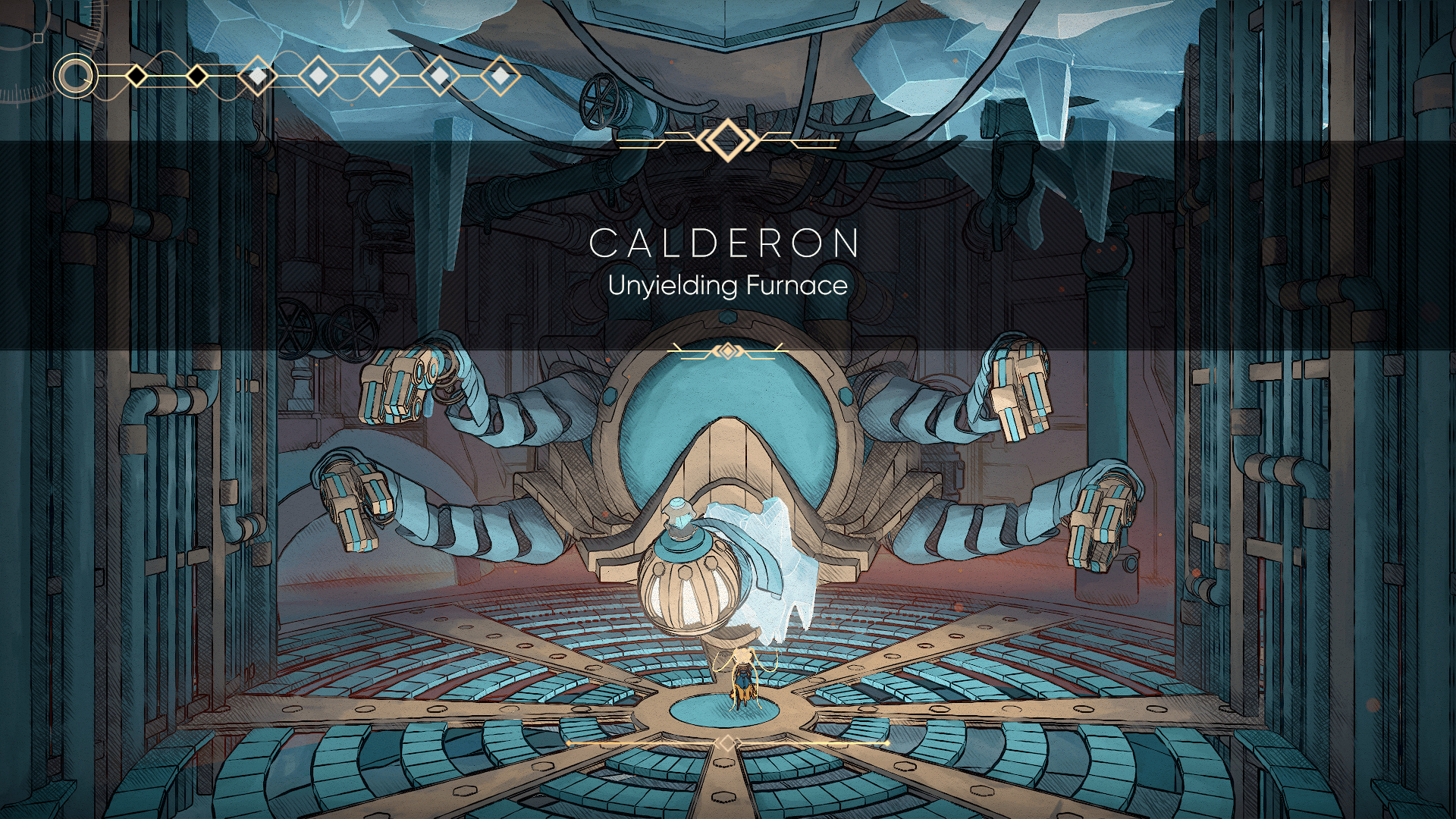
The damage increase is so gradual that I found myself learning patterns far quicker than I was dying, typically only needing 3-5 runs to defeat a particular boss. Even on the bosses that gave me a real hard time (looking at you, Poltergates), I didn't feel the assist, I just had to trust it was happening in the background. But, the reputation of these games (spending hours trying to best this or that boss) has created enough of a wall that when I see signs of insurmountable odds, I'm just going to turn it off and go somewhere else, not lock in. I only picked MIO back up after setting it down to review other games because I knew the assists were there to help, this one especially.
Pacifist
The Pacifist assist turns almost all non-boss monsters docile, until you attack them, including enemies that appear when you open chests or locked-room combat challenges. Boss monsters, as well as boss-room minions will still attack you on sight.
Have you ever been annoyed at taking that one hit when you got sloppy on the boss run-back? This is the one for you.
I have been pretty outspoken about combat design in games and how the best games find a way to incorporate the combat into the thematic or narrative core of their game. One of my (only) complaints about Metroid Dread was how unnecessary the enemy-dense levels felt when it was clear the game was more interested in the EMMIs. This assist solves that problem.
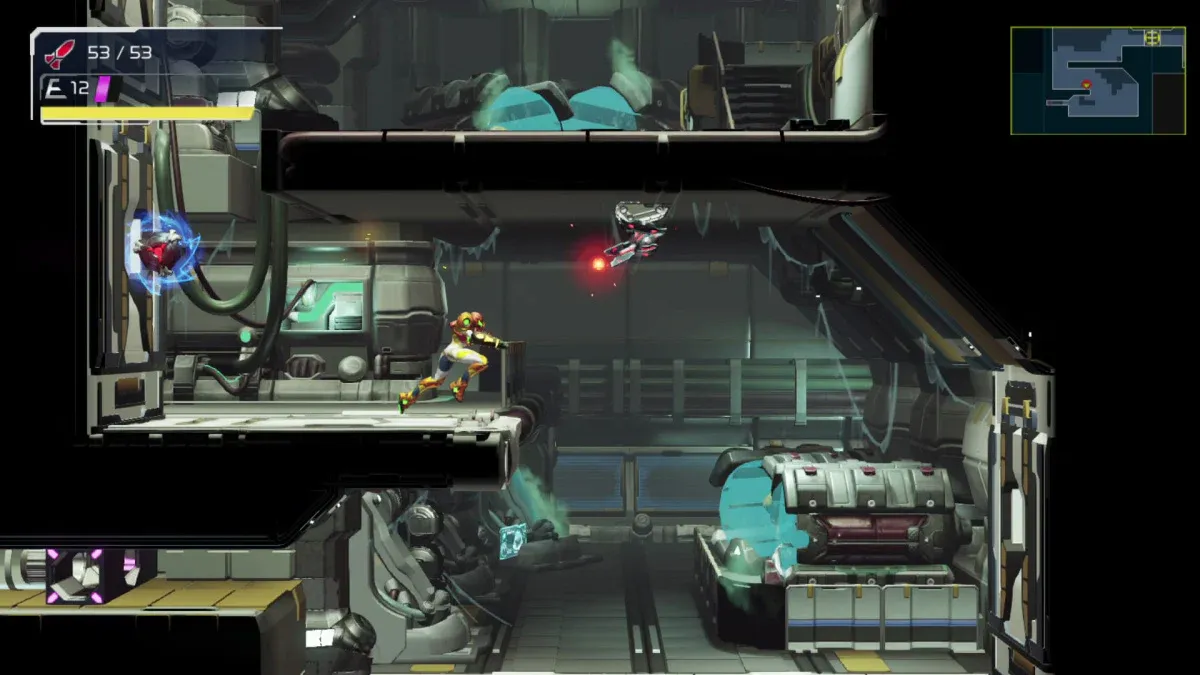
Zipping around in MIO to do the things I love—the platforming and the exploration—is significantly more fun for me with the Pacifist assist enabled. I’m spending my time poking at corners, instead of fretting, at one health left, if I should be going back to the last Overseer checkpoint to try this again. The fear of dying and losing it all matters less. I still have to engage with the combat with the bosses and the locked-room combat encounters, but the tiny one-off enemies that mean very little in the grand scheme of the game no longer bother me.
In fact, I think what works so well about the Pacifist assist is how much it makes sense with the game. Over centuries (millennia?) these robots have been slowly degrading, losing themselves to decay. With the assist off, that is depicted as violence; with the assist on, it’s emptiness.
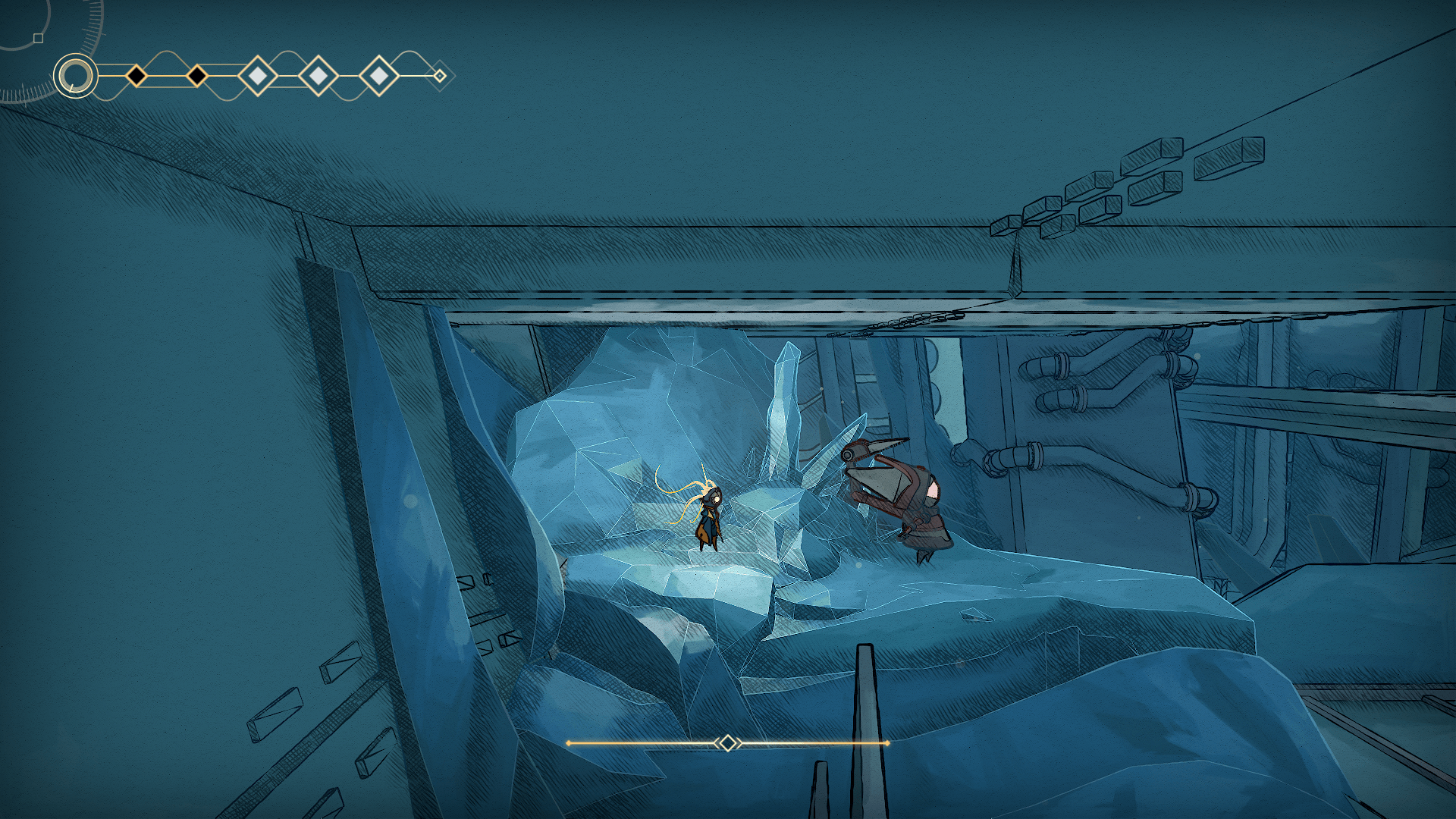
Especially in the locked-room combat encounters, you as the player must attack first. You must willingly choose to assault robots that are, for the most part, decayed and lost to themselves. As you find more lore items explaining what is going on on this ship, the Pacifist (what an interesting name!) assist starts to create an Undertale-esque exploration of violence and mercy. You meet robots who are still themselves, but you’ll even discover later that these bots aren’t what they truly were when there were humans.
You can explore these themes just as well without the Pacifist assist, but I’ve found that forcing myself to engage in the combat, instead of it being forced upon me, is resonating with the game’s message much more.
And none of that is digging into the gameplay ramifications of Pacifist mode. If you’re not fighting enemies, you’re not gathering the massive amounts of nacre you need to heal after punishing platforming challenges (more on that in a bit), nor are you able to buy the mods you need to defeat bosses or manage environmental hazards. Exploration of the world is easier, yes, but if you don’t engage in the combat as much as the game may expect you to, you will be at a disadvantage, even if the bosses are weakened. It’s almost starting to sound like the Pacifist assist is just as much a blessing as a curse, huh?
Ground Healing
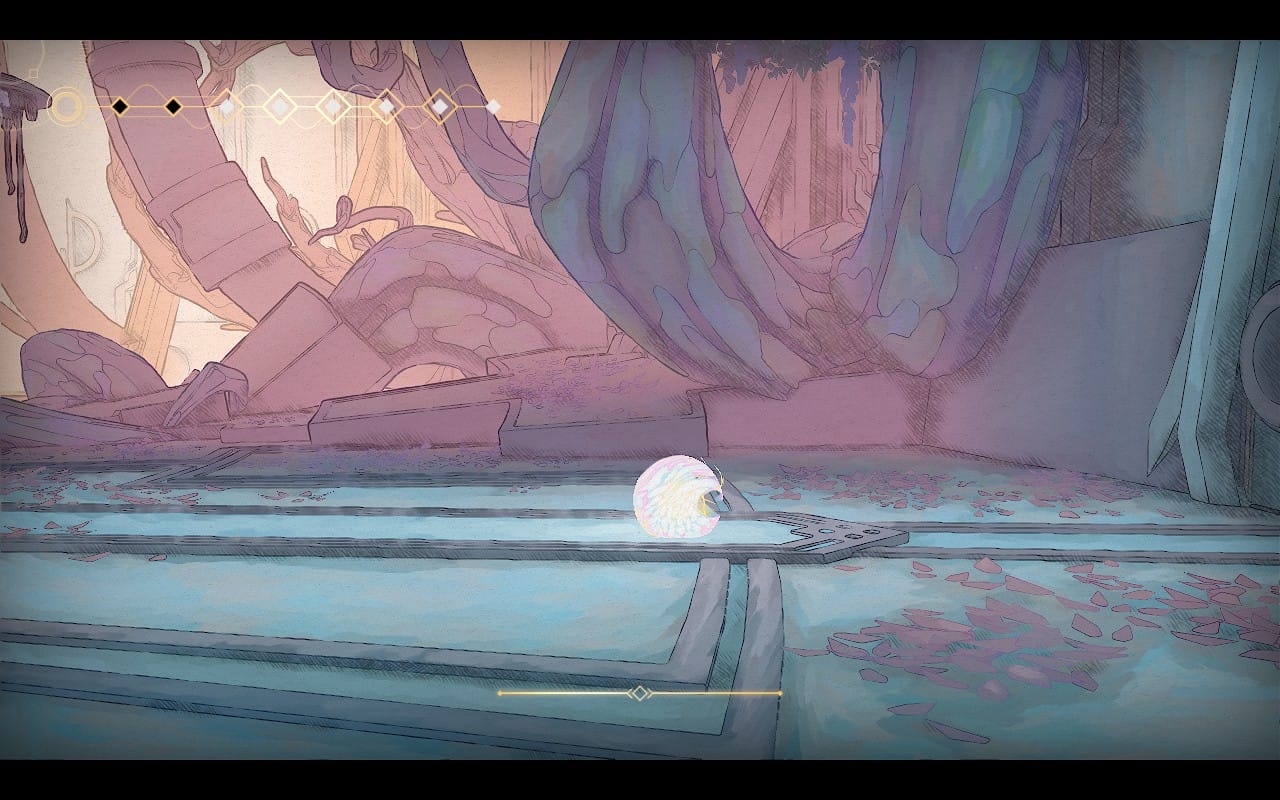
The ground healing assist was the first I turned on almost immediately after starting the game. It’s also the only assist that is a mod you can gain in the late game. With the Ground Healing assist you are given an extra health pip that recharges so long as you spend a certain amount of time on the ground.
This assist comes in clutch when you’re working your way through some pretty complicated platforming challenges because you’ll usually die, take one point of damage, then you can chill for a second, let your heart rate come down, recharge, and do it again. Platforming challenges are just as tricky as they are for non-assisted players, but you can, functionally, take as many runs as you’d like with minimal stress.
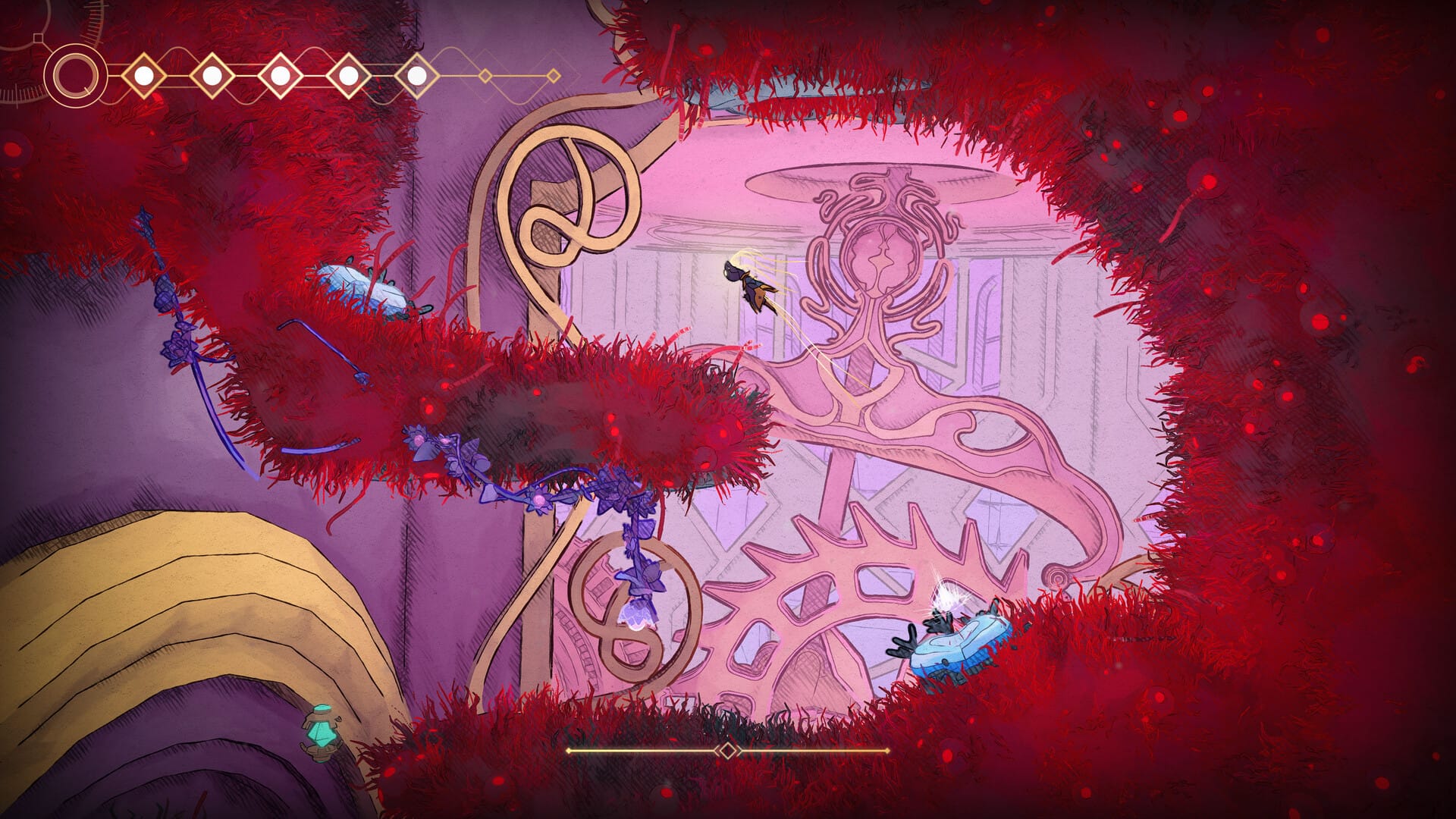
That’s not to say there’s no stress. Especially towards the end of MIO, many of the platforming challenges require attacking enemies to regain stamina to chain a few platforming abilities together to get through. So, even with the Pacifist assist enabled, you’re still engaging with the full platforming challenge. Add in that health only recharges after time on the ground and there’s a very good chance that you’ll take a hit or two from an enemy, then another from environment. You’ll still die quickly, you just have a bit of a buffer.
The real magic of the Ground Healing assist is the push and pull in boss encounters. I’m bad at the dodge in MIO. I don’t like it, I don’t use it, and, when I do use it, it never works. But, when I’m dodging attacks left and right with double jumps and grapple jumps in a boss encounter, I’m not recharging that health pip. If I want to maintain my extra health pip edge on the boss, I need to engage with a part of the game I decided isn’t for me: the dodge.
Many—perhaps most!—of my boss deaths in MIO are from sitting on my last health pip, bobbing and weaving on the ground hoping that ground heal will pop and I’ll have my buffer back. The extra health is a boon for platforming, but more often than not, it’s a taunt for boss encounters. Ground Healing is a nudge as well: after a few failed attempts at using the dodge, I built new methods to do the same thing, but hours after building those new methods (double jumps, hairpins, strider clings), I still am trying to use the dodge as a last resort because if I pull it off the reward is worth so much more than a damage avoided.
The game, through its assist, is teaching me to pause.
I’m finishing up MIO: Memories in Orbit soon, but as I’ve played I’ve turned on more of the assists, not less. They compound and combine to make something gorgeous: a virtuous cycle of player choice and accessibility. Each assist gives the player something, while also complicating things as well; with all three active, the assists cover each other’s blindspots while shifting the player’s play style around challenge, not away from it.
When a boss can be weakened after every death, learning their moves so I can push myself to try the dodge again to eke out another ground heal introduced a different kind of challenge than the raw boss encounter. I still die from hubris or getting greedy, but it’s greed for life, not damage.
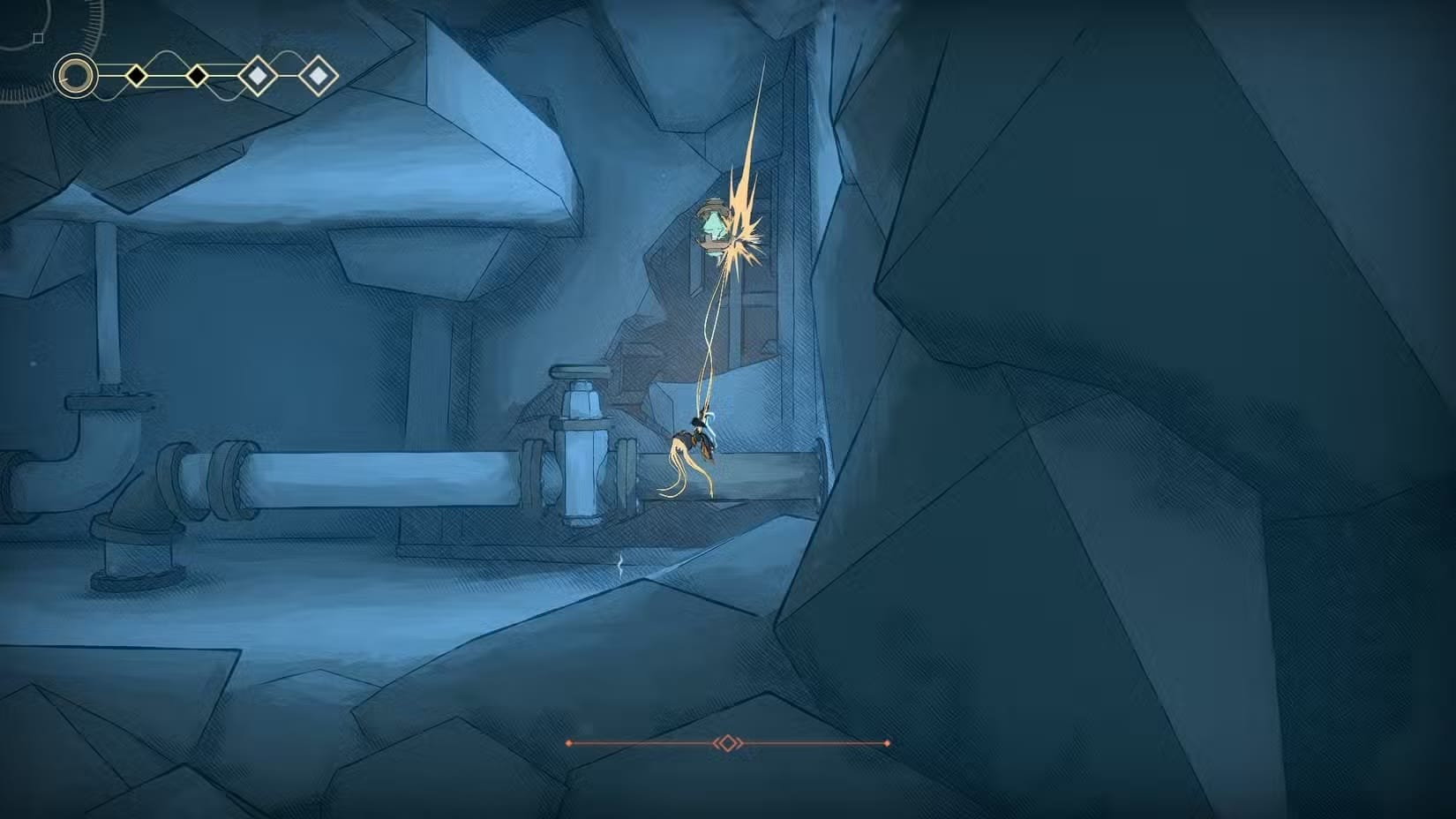
When I can fly through an environment safely because none of the creatures will attack me, I’m encouraged to attempt boss encounters more; the run-back isn’t demoralizing, it’s anticipation.
When I can arrive at a platforming challenge without combat—and without nacre to heal—I still have to manage precision with jumps and patience. Pausing to get that ground heal is still a long wait when I know I can just pull this jump off. But that pause is also ground_ing_. The game, through its assist, is teaching me to pause. To let the adrenaline subside for a moment. Think about what you need to do. Yes, you can take as many attempts as you need most of the time, but, to succeed, you must greet the challenge with the same level of precision as everyone else.
Each assist gives the player something, while also complicating things as well.
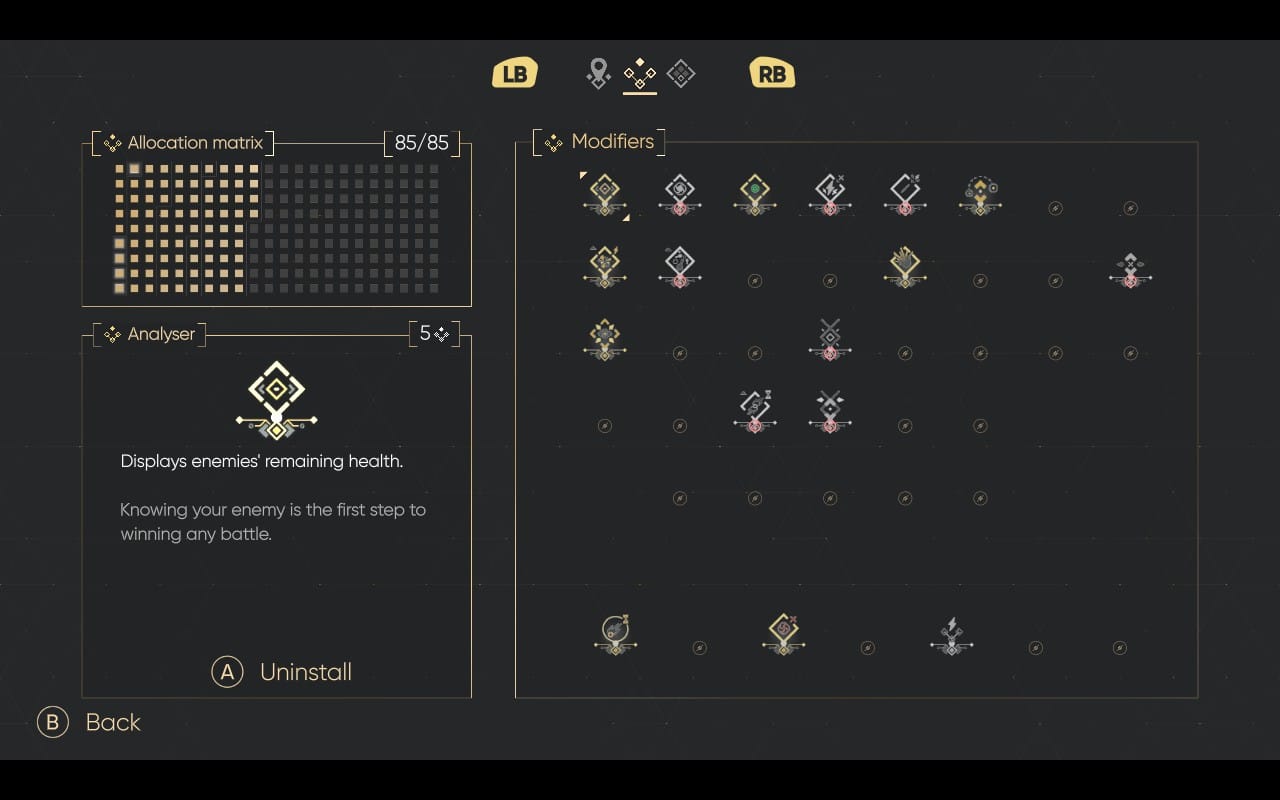
The developers have positioned these as assists, ways to “adjust difficulty,” but I don’t think that’s completely right. Especially when you discover the ground heal assist as an in-game mod, I think the assists become always-accessible mods to your play style, just as impactful as adding a new attack to your hairpin, or being able to see your health bar.
It wouldn’t be surprising if MIO had mods for Pacifist or Eroded Bosses. There is a potent push and pull to each setting that feels just at home as Final Fantasy 16’s Timely Accessories that make parries easier, or Silksong’s jump modifications (or compass marker), or Elden Ring’s Spirit Ashes. There is, besides them being active at the beginning of the game, no reason these powers can’t be bestowed elsewhere in the game, just like Ground Healing.
Perhaps the most telling—if inconsequential—evidence for this, is that enabling any (or all) of the assists does not stop a player from gaining achievement progress or the true ending. I, as an assist player, have every opportunity to complete the game to its fullest extent as anyone else. So, sure, I have a few extra things turned on for my run through MIO, but my run is not lesser for it; in some ways (especially Pacifist), I find the run to be thematically more enriching than otherwise.
There are, as they say, too many games. Douze Dixièmes is one of the latest casualties of that. But, it’s the flowering proliferation of difficult games hearkening back to Hollow Knight (and further) that have evolved that type of game that gives me hope.
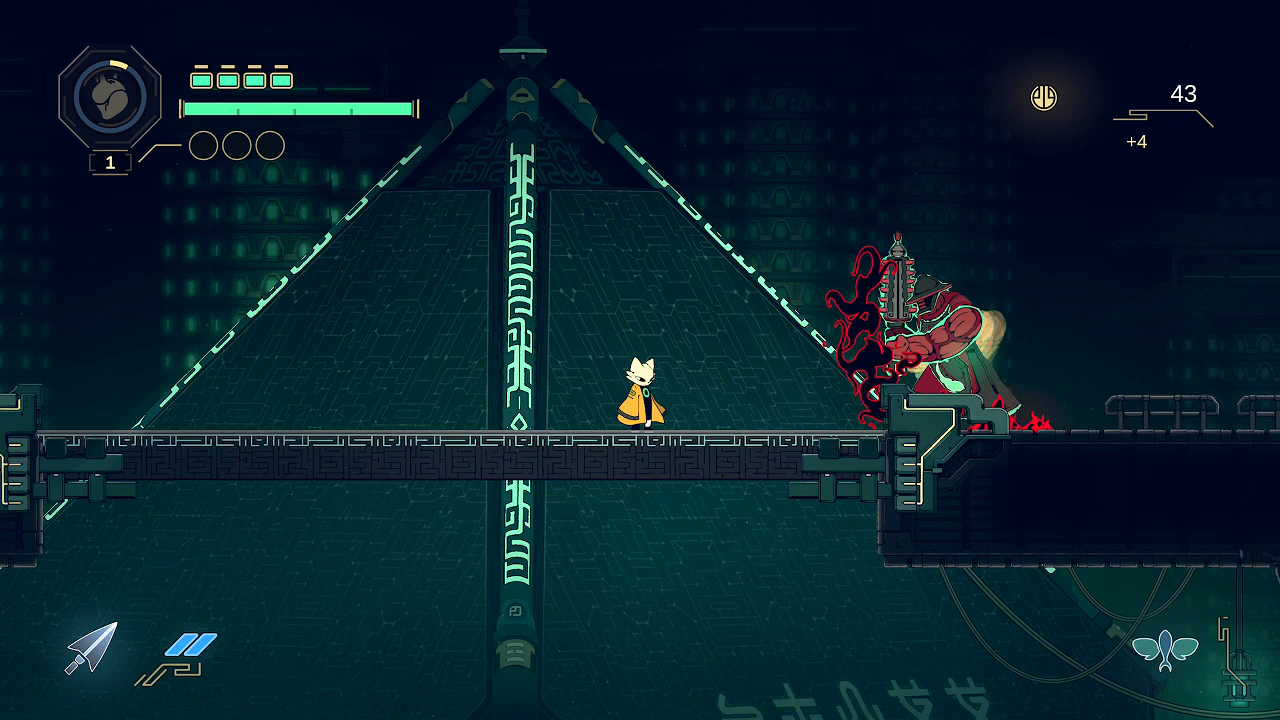
I look to games like MIO, Constance, and Nine Sols with far more excitement than I do for Silksong or Hollow Knight. I’m sure those games are good and they certainly don’t need my $20, but I see it very unlikely that I’ll ever play them; MIO proves it for me: games can remain difficult, thematically rich, and deeply rewarding, all while allowing more players to experience everything beautiful about the game.
MIO: Memories in Orbit is a delightful video game, made better by its thoughtful assists that enhance the game in meaningful ways, not just to make it easier. Assists can deeply effect players and how they navigate, experience, and perceive the world and story around them; I’m not adjusting the difficulty, I’m shifting it to play an equally, but differently difficult game. When I look back on my time with MIO, this is the memory I’ll have: of a studio making an incredible souls-like metroidvania that feels richer when you ask for help. Almost like that's a theme in the game or something.